

Compliments, Comments and Complaints 
Support at Home is coming on 1st November. Learn more about the changes.
Get started
Learn more about our mental health services
Get started
Learn more about our youth and family services
Get started
Learn more about our domestic violence services
Get started

Respite for Lutheran missionaries

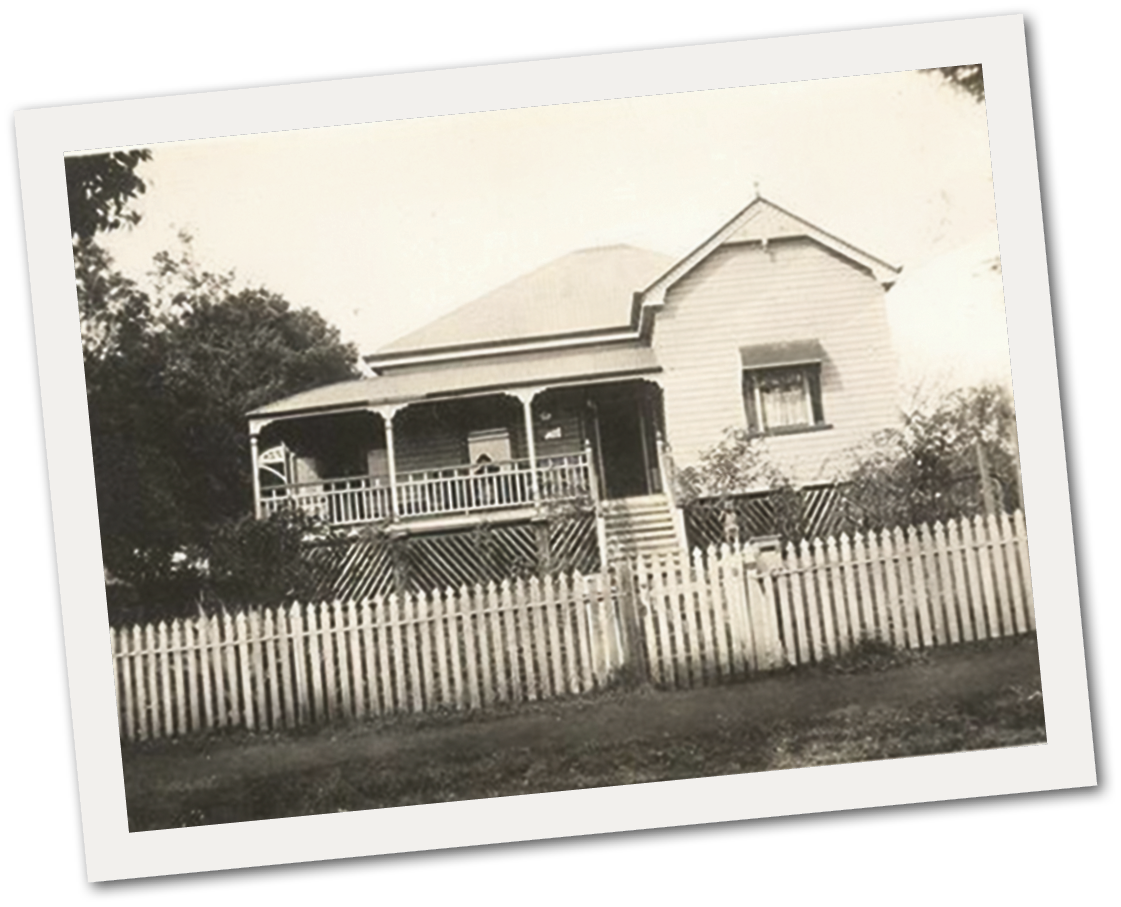
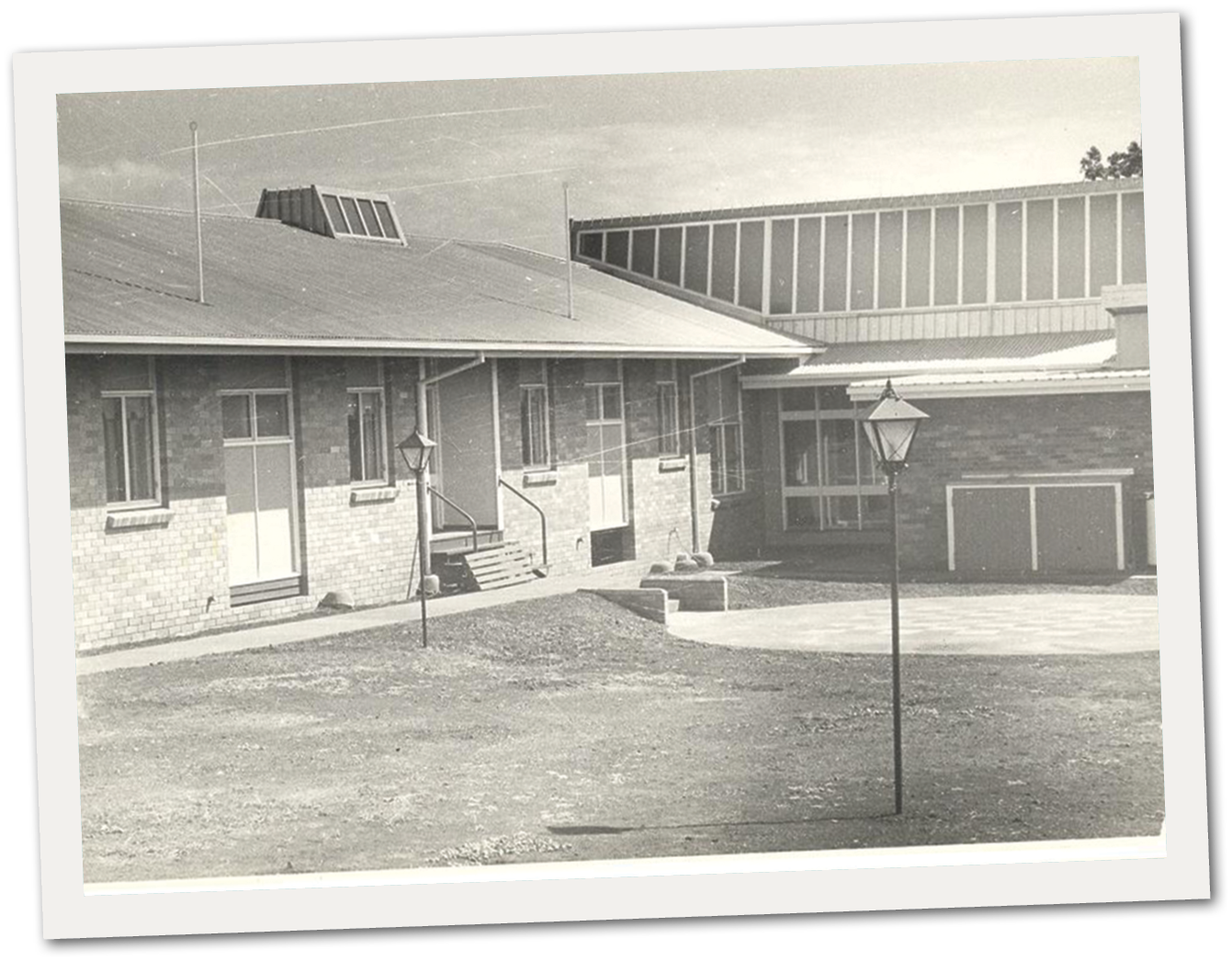
The story of the ‘Salem old folks’ home’ in Toowoomba officially begins in 1935. However, the history of the Salem name and the rest home on Hume Street stretches back to the early 1920s.

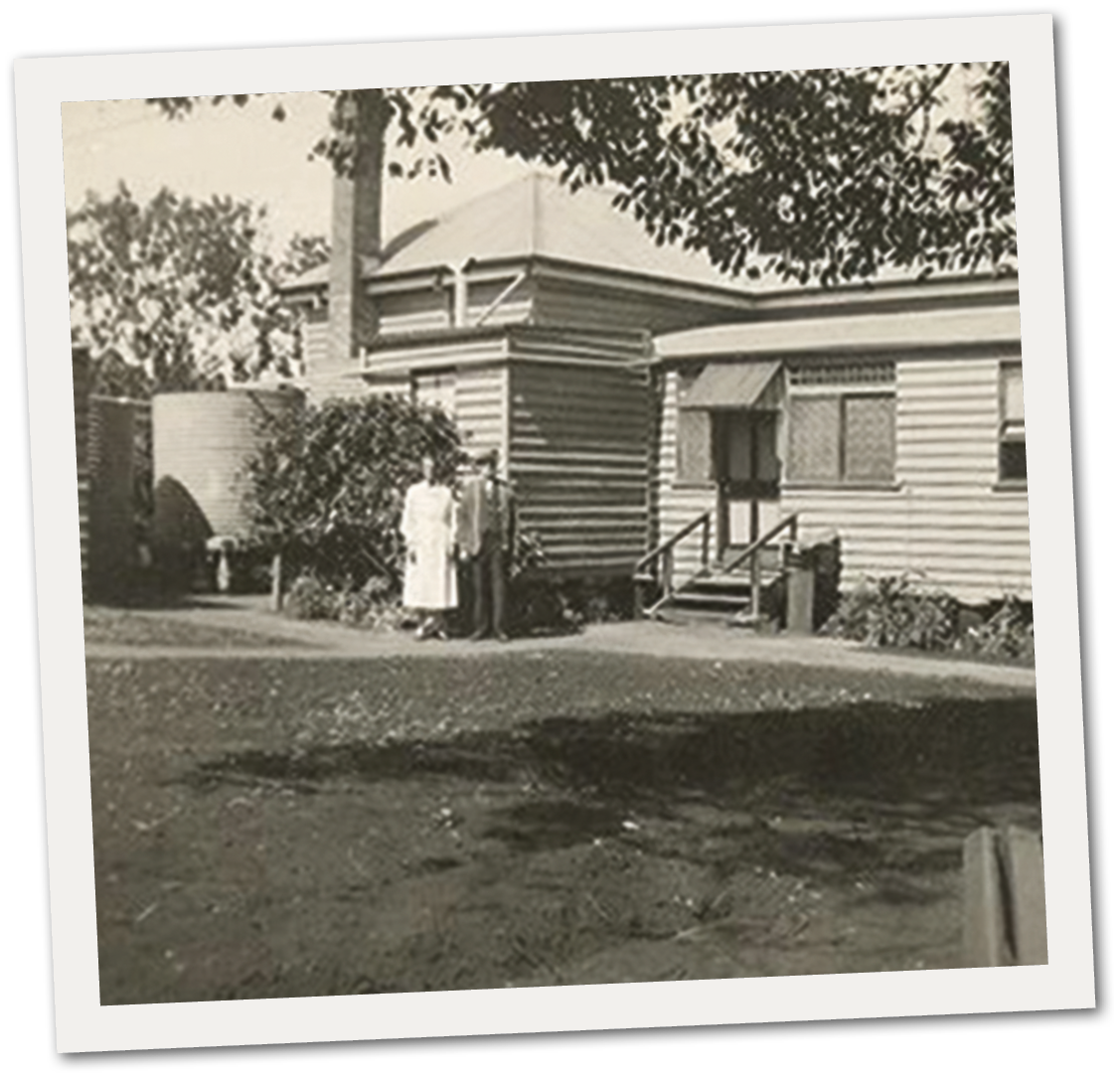
It was in 1921 that Pastor Ernst Victor Hermann Gutekunst of St Paul’s Lutheran Church on Phillip Street proposed establishing a home to provide rest and respite for Lutheran missionaries on furlough from Papua New Guinea (PNG). A family home on the corner of Cranley and Hume Streets in Toowoomba was purchased for the purpose.

This initial Salem Lutheran Rest Home opened and received its first missionaries in March 1922. The initiative was driven by Pastor Gutekunst and generously supported by the Lutheran community.

Download a pdf booklet of Salem Origin Stories

Download PDF

A rest home for local ‘old folk’

Salem would continue to provide rest and respite for missionaries on furlough from Papua New Guinea for more than 12 years.
As this demand decreased and the needs of the local community grew, Pastor Gutekunst proposed Salem be converted into a rest home for elderly members of the local community.
Salem welcomed its first four residents – or ‘inmates’ as they were curiously called at the time – in 1935.
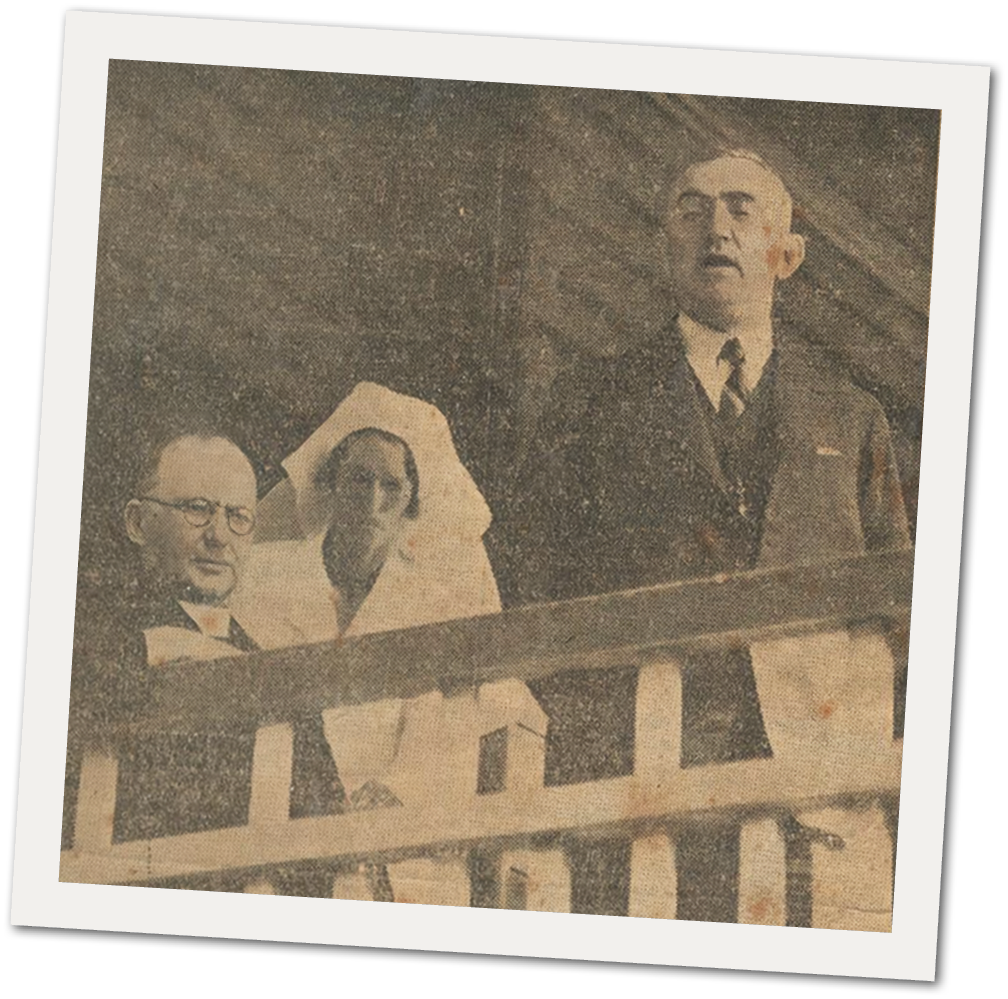
The new Salem Lutheran Rest Home was officially opened on 1 December that year by the President of the then United Evangelical Lutheran Church of Australia (UELCA) Rev AR Reuther, Queensland Premier Hon Forgan Smith and Toowoomba Mayor Alderman JD Annand.
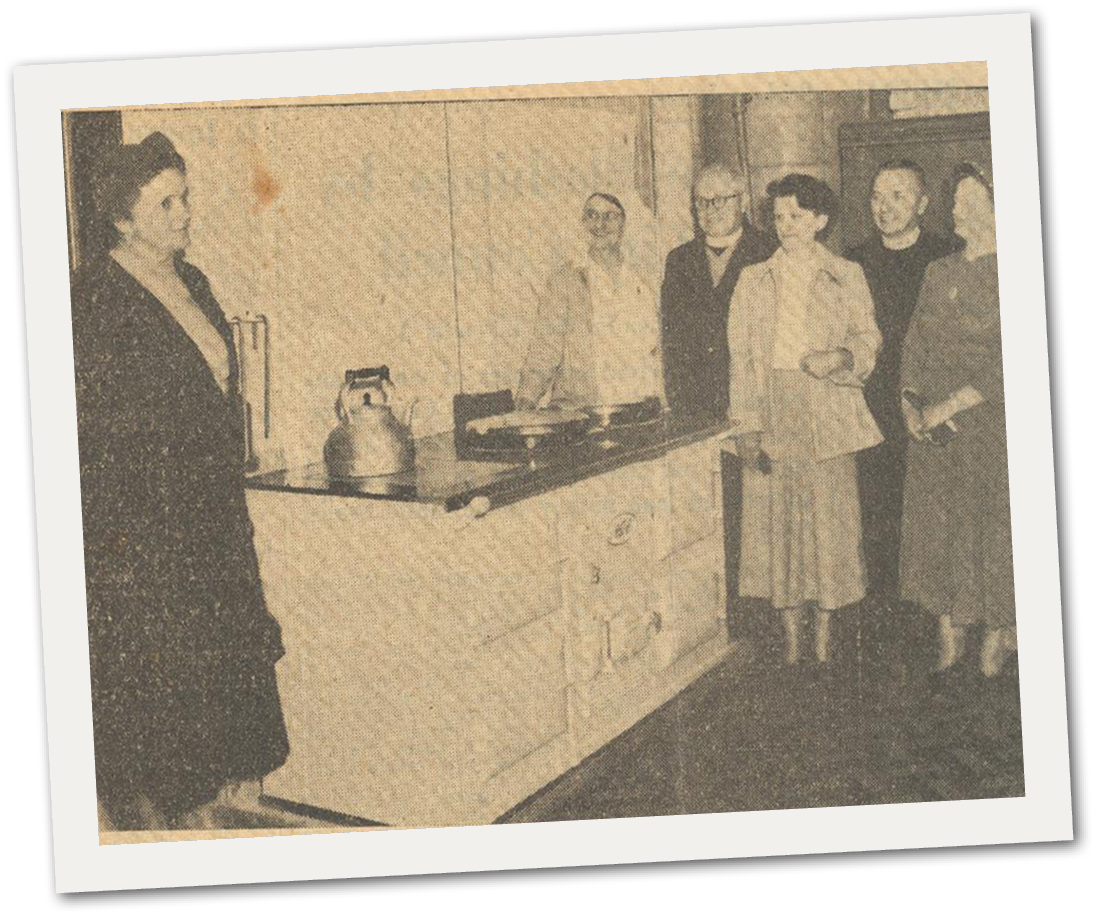
The home could accommodate up to 11 residents, a matron and a maid. The first matron was Mary Hanley.

Why this rest home was called ‘Salem’

Toowoomba-raised Dr Russell Briese, Lutheran Services’ Director of Chaplaincy and Ministry Development, explains that ‘Salem’ is short for ‘Jeru-salem’.
‘Salem’ is a Hebrew word meaning peace. It is related to another word perhaps more familiar to us today – ‘shalom’.

Built and supported by the Lutheran community

In these early times, prior to government funding of aged care, Salem Lutheran Rest Home was built, operated and funded by the Queensland UELCA Synod and the local congregations and community – through times of economic hardship, drought and war.
For many years, it was the combined efforts and generous support of multiple Lutheran parishes – including Trinity Hume Street, St John’s Wilsonton and St Paul’s – and dedicated members of the local congregations and community that saw Salem continue to operate and grow.
Lutheran women’s guilds throughout the Darling Downs raised funds and donated items. Above all, they provided friendship and entertainment – and baked thousands of biscuits.

Growing the Salem home, site and care

Salem grew and evolved over the years, responding to the changing needs of residents and the local community. Extensions were built. Improvements were made. Adjacent properties were purchased.
In the late 1930s, major extensions were added, including two new wings, funded largely by the Lutheran congregations of the Darling Downs.
In the early 1940s, an adjacent property was purchased and major expansion of the existing site undertaken, funded largely by a generous bequest from CLD Wittenberg.
Salem initially accommodated mostly women. A dedicated men’s home was opened in the mid 1950s, following the purchase of an adjacent property for the purpose.
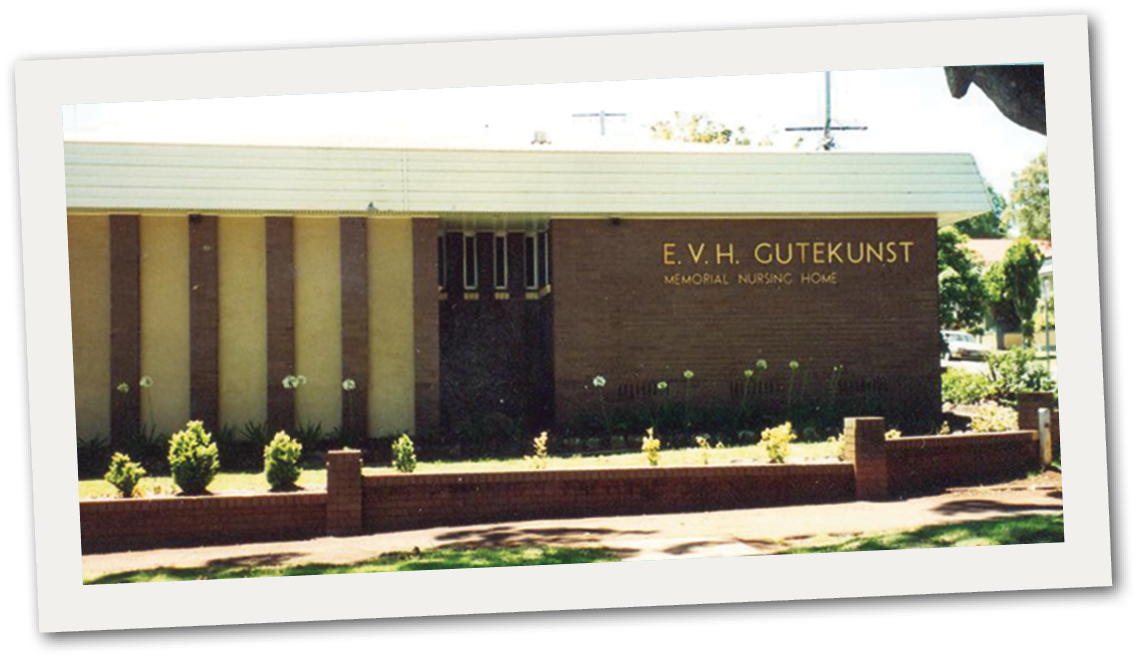
In the early 1970s, the 20 bed EVH Gutekunst Memorial Nursing Home was opened, at a cost of $103,550, plus $8,000 for furnishings, supported by government subsidies.
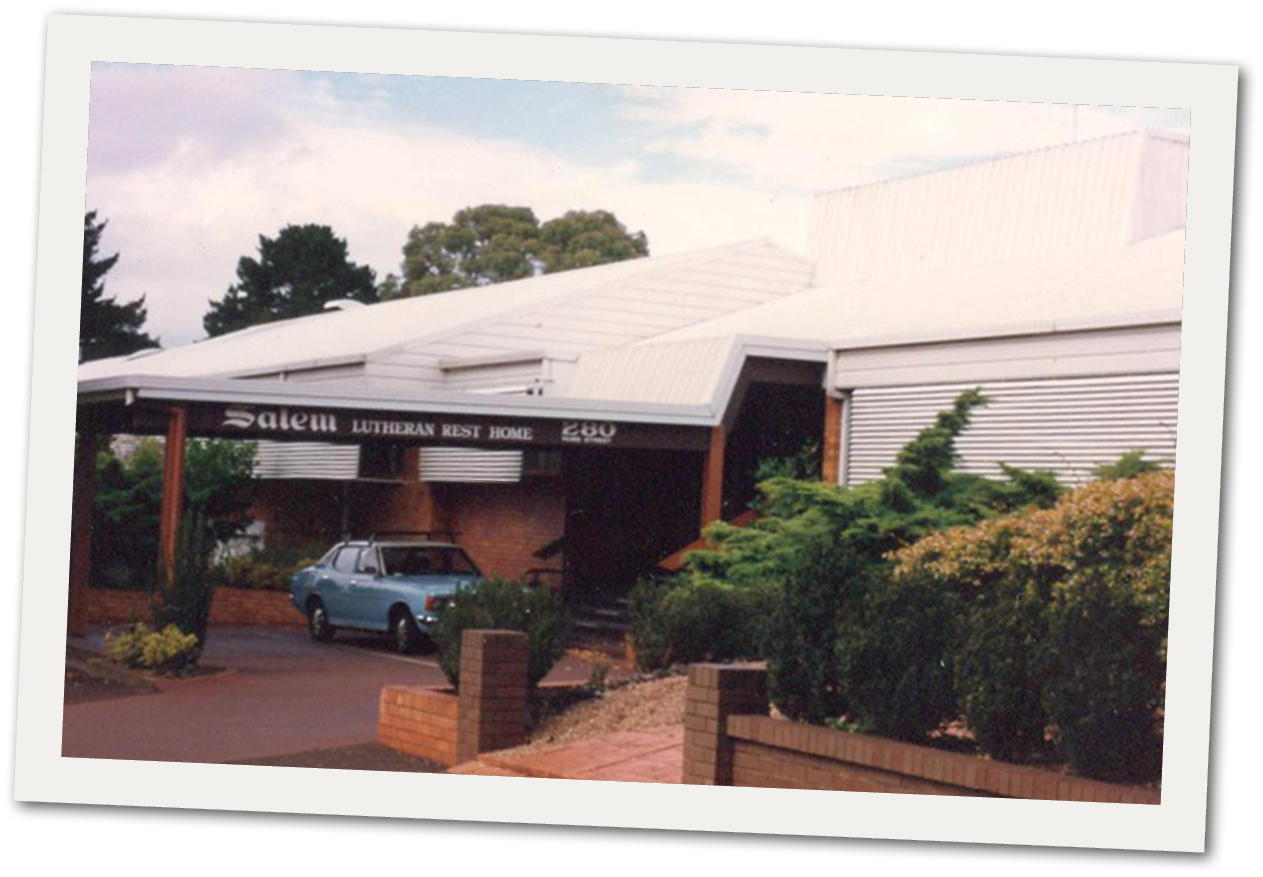
Extensions were developed in 1980, generously supported by community fundraising activities. Adjacent properties in South Street were purchased in the mid 1980s and rented out, with a view to future expansion.
In-home support services were also developed in the late 1980s to support community-based aged care.

A key figure in the Lutheran Church in Toowoomba – and Queensland

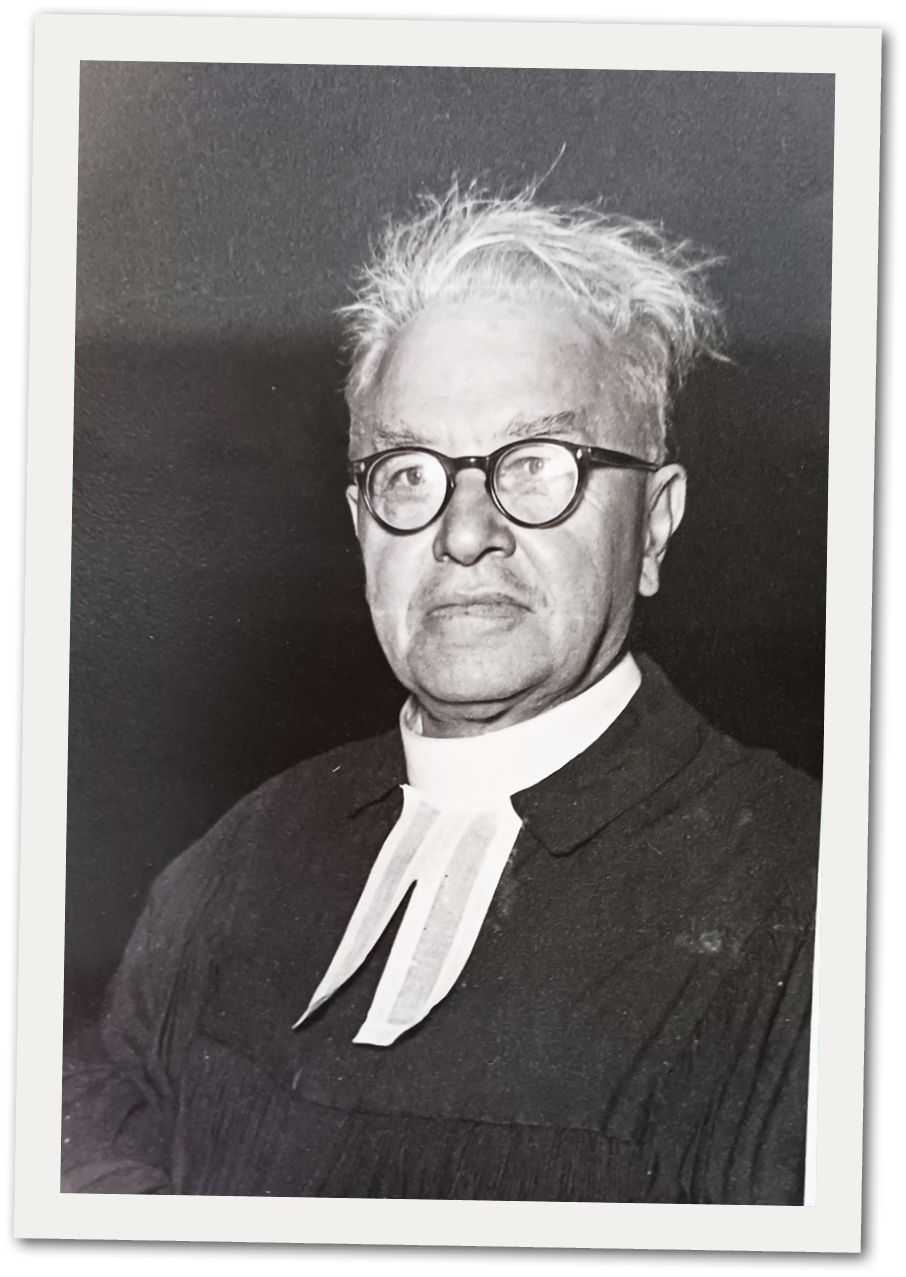
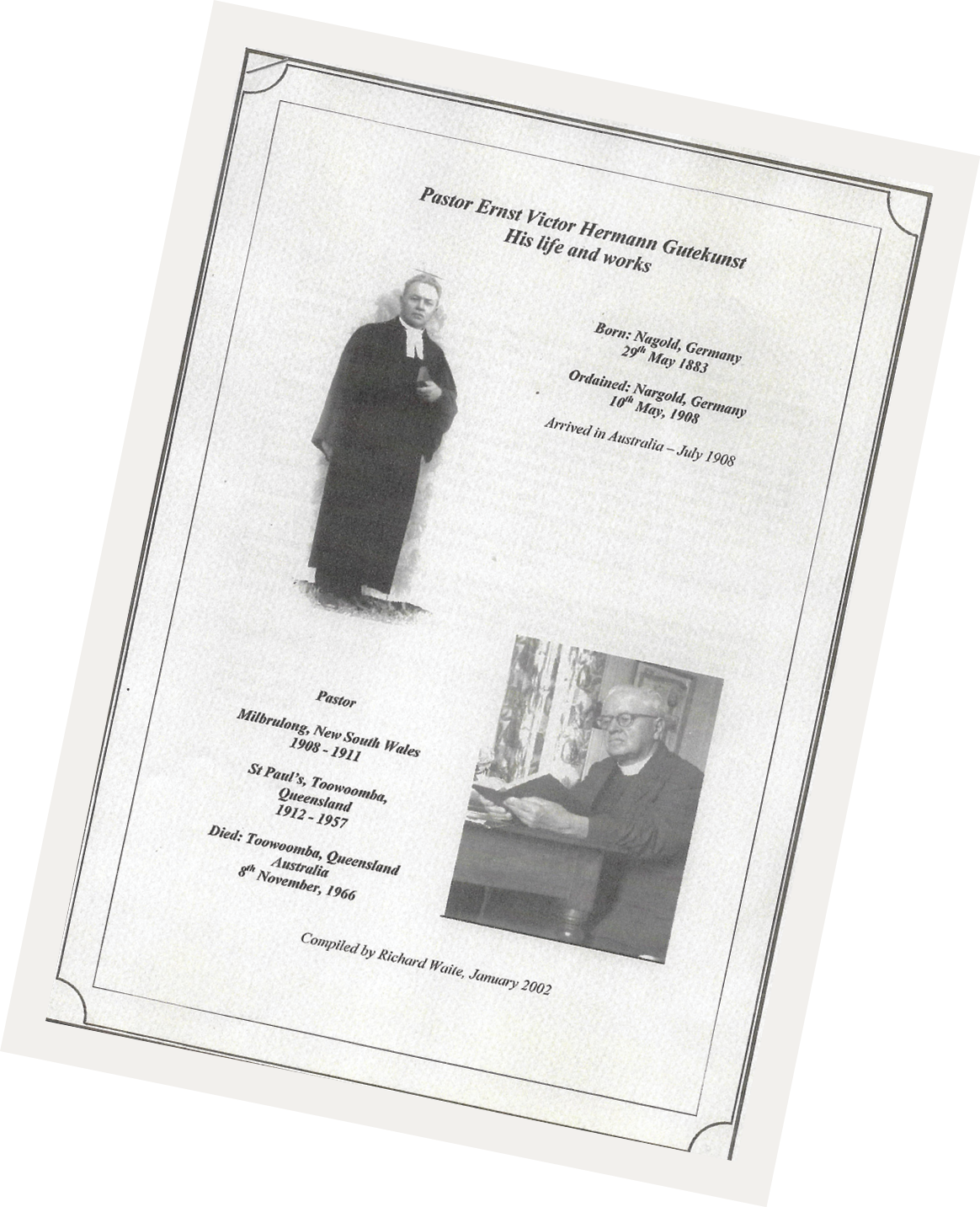
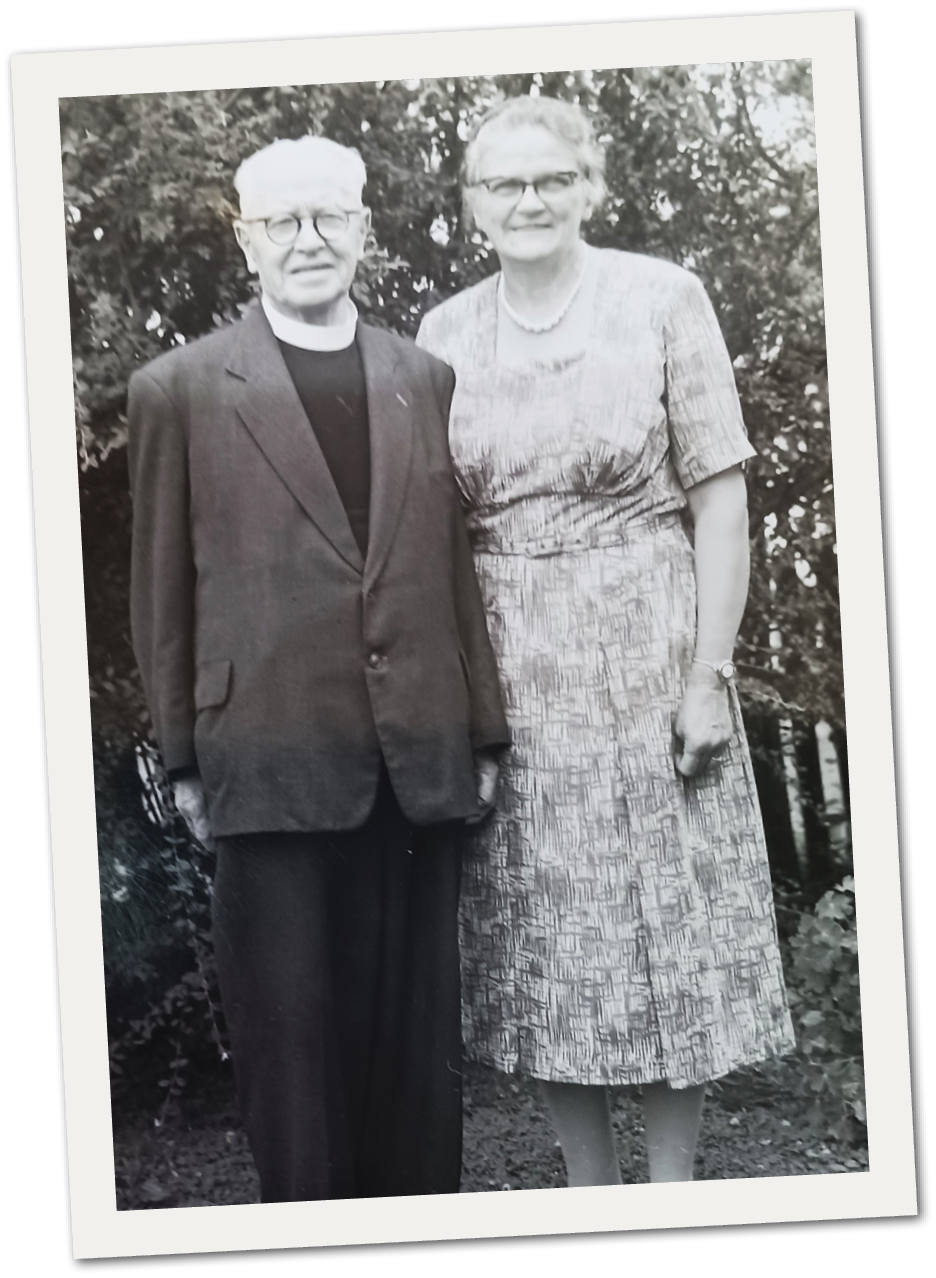
Pastor EVH Gutekunst served the St Paul’s Lutheran Church Toowoomba parish from 1912 to 1957. He was the driving force that established Salem, and remained an active committee member and friend of the home and community throughout his long life. He was a key figure in the development of the Lutheran Church in Queensland and the establishment of services provided to congregations and communities.

The transition to Lutheran Community Care

In the late 1990s, increasingly complex funding and regulation requirements saw the Lutheran Church of Australia Queensland District (LCAQD) establish an umbrella organisation – Lutheran Community Care – to manage the district’s community services and aged care operations, including Salem.
Having worked so hard and with such devotion to build Salem, many in the Management Committee, congregation, staff, volunteer and supporter network found this transition difficult. With the benefit of hindsight, we now see many aspects of this transition could have been better handled, resourced and supported.
What didn’t change however were the Salem name, welcome and spirit.

Part of the Lutheran Services family today

Lutheran Community Care was renamed Lutheran Services in 2017. As the operator of Salem and Northridge Salem today, Lutheran Services recognises the considerable achievements and challenges of the past. We thank the many congregation and committee members, volunteers and supporters for their grace, devotion and hard work. Their efforts and endeavours continue to benefit the many residents, clients and staff of Salem today.
Lutheran Services was established to ensure the ministry of care envisaged and built by our founders would continue to thrive – so more people could experience Christ’s love through their services. We hope this Origin Story project will help to record, share and celebrate the incredible journey and spirit that built Salem and Northridge Salem, and continue to make them such special places.
In the mid 2020s, more than 90 years on, Salem is home to 87 residents. Northridge Salem, opened in 1996, is home to 42 residents. Salem Home Care provides in-home support services to more than 140 households throughout Toowoomba and surrounding regions.
These are also great places to work and important employers in the region. Salem employs more than 130 people, Northridge Salem more than 65, and Salem Home Care more than 35 people.
The development of Northridge Salem

In the early 1990s, opportunities were explored to further expand Salem to meet growing demand.
A property was purchased in Holberton Street in Rockville, about 5 km from Salem. This new property was adjacent to a well-established retirement living community operated by Good Shepherd and Redeemer Lutheran congregations – Northridge Haven Retirement Village.
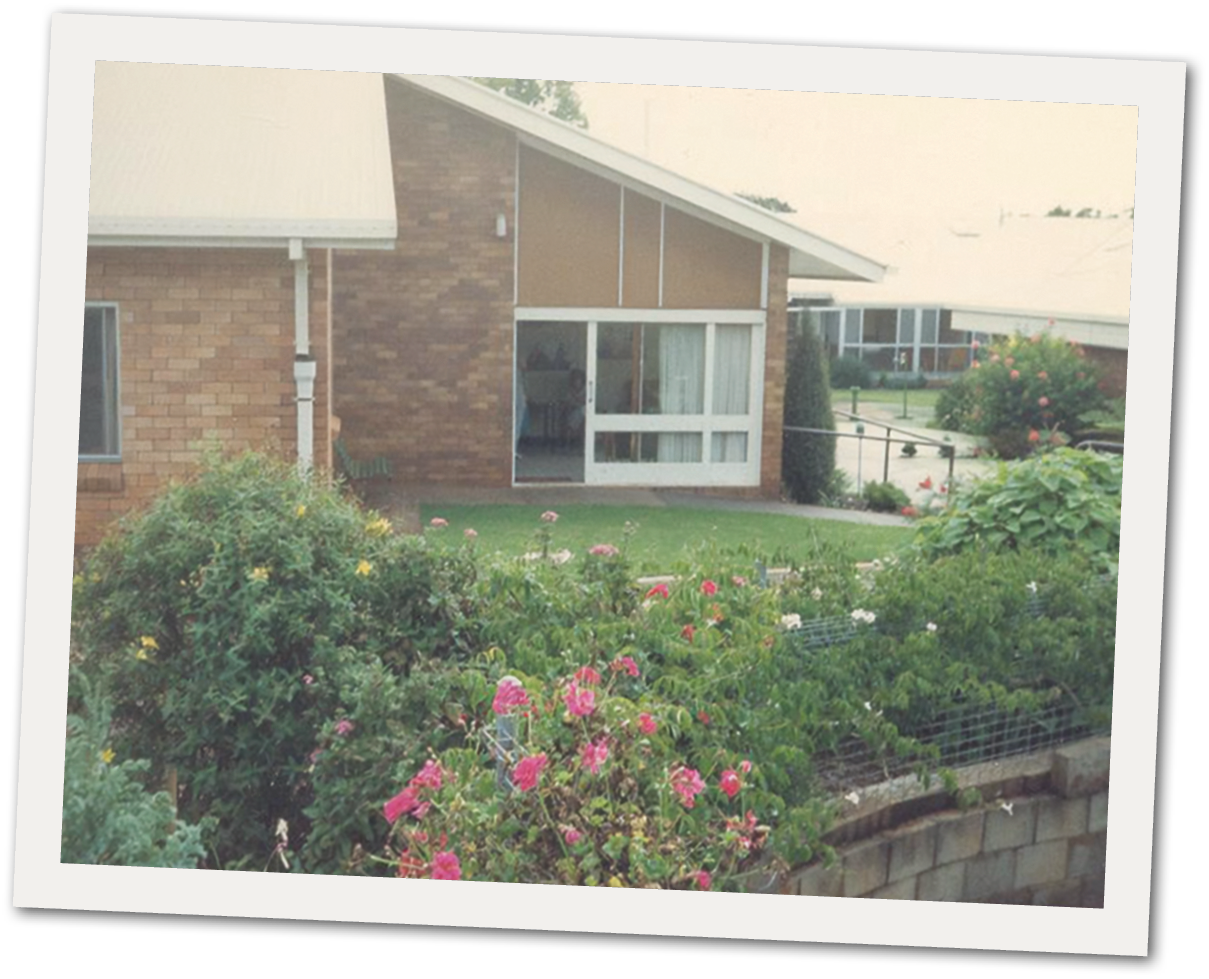
Development commenced on this new site on the second Salem – a 42-bed residential aged care facility. Northridge Salem Aged Care opened in 1996.
The Good Shepherd/Redeemer-run Northridge Haven Retirement Village and Lutheran Services’ Northridge Salem Aged Care continue to operate side-by-side but independently to this day.

The transition to Lutheran Community Care

In the late 1990s, increasingly complex funding and regulation requirements saw the Lutheran Church of Australia Queensland District (LCAQD) establish an umbrella organisation – Lutheran Community Care – to manage the district’s community services and aged care operations, including Salem.
Having worked so hard and with such devotion to build Salem, many in the Management Committee, congregation, staff, volunteer and supporter network found this transition difficult. With the benefit of hindsight, we now see many aspects of this transition could have been better handled, resourced and supported.
What didn’t change however were the Salem name, welcome and spirit.

Part of the Lutheran Services family today

Lutheran Community Care was renamed Lutheran Services in 2017. As the operator of Salem and Northridge Salem today, Lutheran Services recognises the considerable achievements and challenges of the past. We thank the many congregation and committee members, volunteers and supporters for their grace, devotion and hard work. Their efforts and endeavours continue to benefit the many residents, clients and staff of Salem today.
Lutheran Services was established to ensure the ministry of care envisaged and built by our founders would continue to thrive – so more people could experience Christ’s love through their services. We hope this Origin Story project will help to record, share and celebrate the incredible journey and spirit that built Salem and Northridge Salem, and continue to make them such special places.
In the mid 2020s, more than 90 years on, Salem is home to 87 residents. Northridge Salem, opened in 1996, is home to 42 residents. Salem Home Care provides in-home support services to more than 140 households throughout Toowoomba and surrounding regions.
These are also great places to work and important employers in the region. Salem employs more than 130 people, Northridge Salem more than 65, and Salem Home Care more than 35 people.
There for you

As managers of Salem/Northridge Salem and many other aged and community services today, Lutheran Services is one of Queensland’s longest established and most diverse not-for-profit providers of human services. As part of the Lutheran Church of Australia Queensland District, we draw from, express and add to the life and mission of the Church. We have grown out of the dreams and hard work of our founding Lutheran congregations. This Origin Story is another wonderful example.
Lutheran Services draws on the rich Lutheran tradition of care for the individual, family and community. We provide services, support and accommodation for older people, young people, families, people living with disability or mental health concerns, and people experiencing domestic and family violence. We serve metropolitan, regional and rural communities from more than 20 sites throughout Queensland – from Tallebudgera to Biloela.
While these sites and services are very different in where they are and what they do, they all have one thing in common: they began with a local congregation working together to meet a need and serve their region and community. These endeavours were often the first services of their kind in their region. Some were the first of their kind in Queensland. Today, they are integral and highly respected contributors to their communities and industries, providing vital care, support, employment and leadership.

The Salem Origin Story is also the Lutheran Services Origin Story

Salem Aged Care in Toowoomba is the longest established of the many sites managed by the organisation we know today as Lutheran Services.

The origin of Salem Aged Care in Toowoomba therefore also represents the origin of Lutheran Services.

A meeting room at Lutheran Services in Milton is called the ‘Hanley Room’ in honour of Salem’s first matron, Mary Hanley.

Timeline

1922
  • Salem Lutheran Rest Home opened for Lutheran Missionaries on furlough from PNG
1935
  • Salem converted and reopened as a rest home for the local community
1937
  • Major extensions including two new wings added, funded largely by local Lutheran congregations
1942
  • New home and major expansion funded largely by Wittenberg bequest and congregations
1955
  • Adjacent property purchased and dedicated Men’s Home opened
1957
  • 24 women and 10 men in residence
1959
  • Two brick maisonettes and a new dining room developed
1961
  • Sick bay developed
1972
  • EVH Gutekunst Memorial Nursing Home opened
1980
  • Extensions developed
1983
  • Therapy Centre opened
1984
  • Total of 95 beds in Rest Home and Nursing Home
1986
  • Neighbouring houses in South Street purchased for future expansion
1987
  • In-home support services established
1988
  • Major upgrades, including therapy and activity spaces, hostel and nursing home room improvements, and accessibility enhancements, supported by a mix of community fundraising and government aged care grants
1989
  • Hostel: 69 beds (2 respite care); Nursing Home: 26 beds
1991
  • Daisy Court 12-bed hostel opened
1992
  • Holberton Street property purchased
1994
  • Major extensions and improvements, including front entrance and lift for ambulance and wheelchair access
1996
  • Northridge Salem Lutheran Nursing Home opened in Holberton Street: 42 beds
2002
  • Nova Court opened: 42 beds (replacing EVH Gutekunst Memorial Nursing Home)
2020
  • Major refurbishment of Salem, including Aster, Cedar, the chapel, new hair salon, café, outdoor spaces
2025
  • Salem Aged Care: 87 residents, 130+ staff
  • Northridge Salem: 42 residents, 65+ staff
  • Salem Home Care: 140+ clients, 35+ staff
1922
  • Salem Lutheran Rest Home opened for Lutheran Missionaries on furlough from PNG
1935
  • Salem converted and reopened as a rest home for the local community
1937
  • Major extensions including two new wings added, funded largely by local Lutheran congregations
1942
  • New home and major expansion funded largely by Wittenberg bequest and congregations
1955
  • Adjacent property purchased and dedicated Men’s Home opened
1957
  • 24 women and 10 men in residence
1959
  • Two brick maisonettes and a new dining room developed
1961
  • Sick bay developed
1972
  • EVH Gutekunst Memorial Nursing Home opened
1980
  • Extensions developed
1983
  • Therapy Centre opened
1984
  • Total of 95 beds in Rest Home and Nursing Home
1986
  • Neighbouring houses in South Street purchased for future expansion
1987
  • In-home support services established
1988
  • Major upgrades, including therapy and activity spaces, hostel and nursing home room improvements, and accessibility enhancements, supported by a mix of community fundraising and government aged care grants
1989
  • Hostel: 69 beds (2 respite care); Nursing Home: 26 beds
1991
  • Daisy Court 12-bed hostel opened
1992
  • Holberton Street property purchased
1994
  • Major extensions and improvements, including front entrance and lift for ambulance and wheelchair access
1996
  • Northridge Salem Lutheran Nursing Home opened in Holberton Street: 42 beds
2002
  • Nova Court opened: 42 beds (replacing EVH Gutekunst Memorial Nursing Home)
2020
  • Major refurbishment of Salem, including Aster, Cedar, the chapel, new hair salon, café, outdoor spaces
2025
  • Salem Aged Care: 87 residents, 130+ staff
  • Northridge Salem: 42 residents, 65+ staff
  • Salem Home Care: 140+ clients, 35+ staff

Gathering Salem's origin story

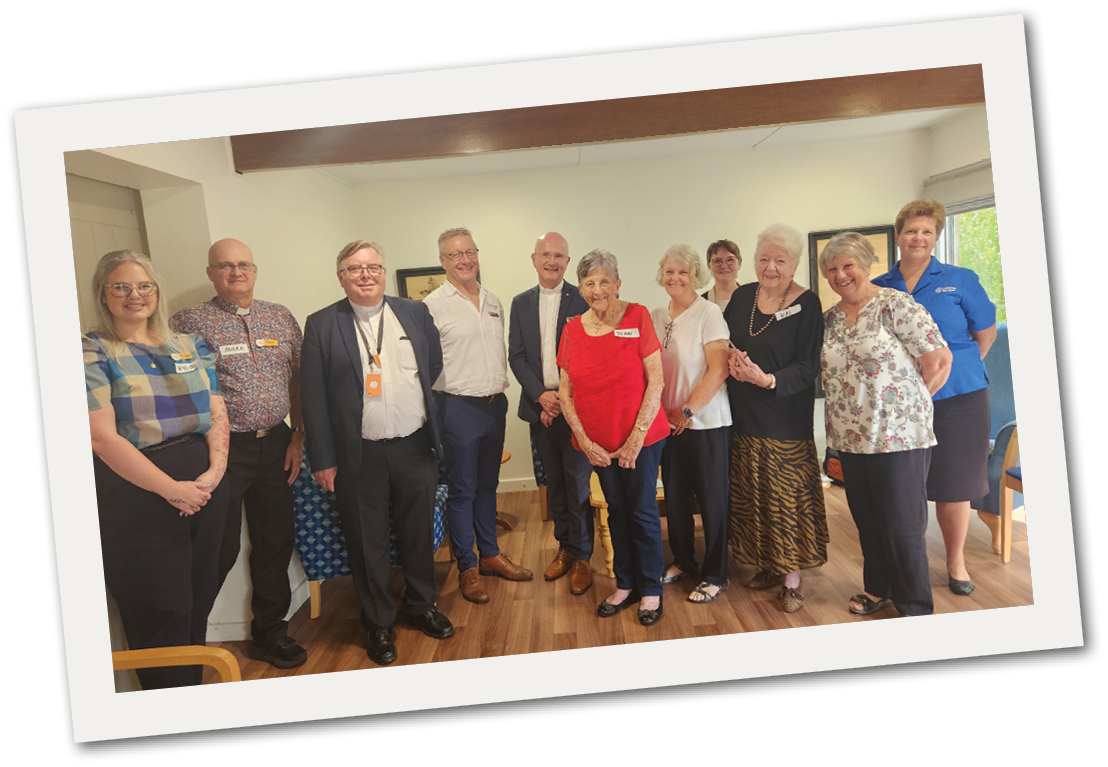
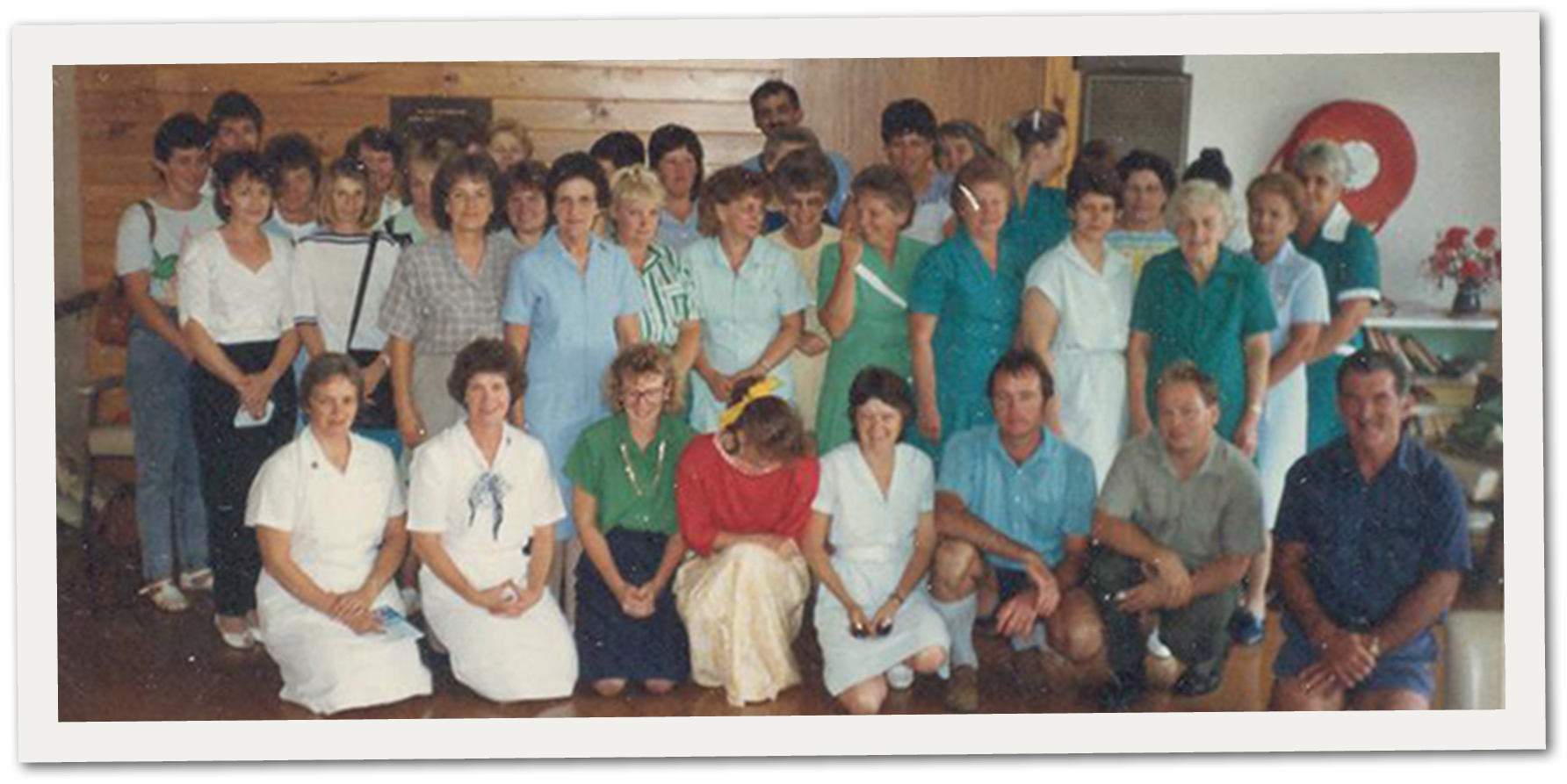
Each Origin Story project begins with a ‘storytelling gathering’ attended by those with historical and current connections with Salem.

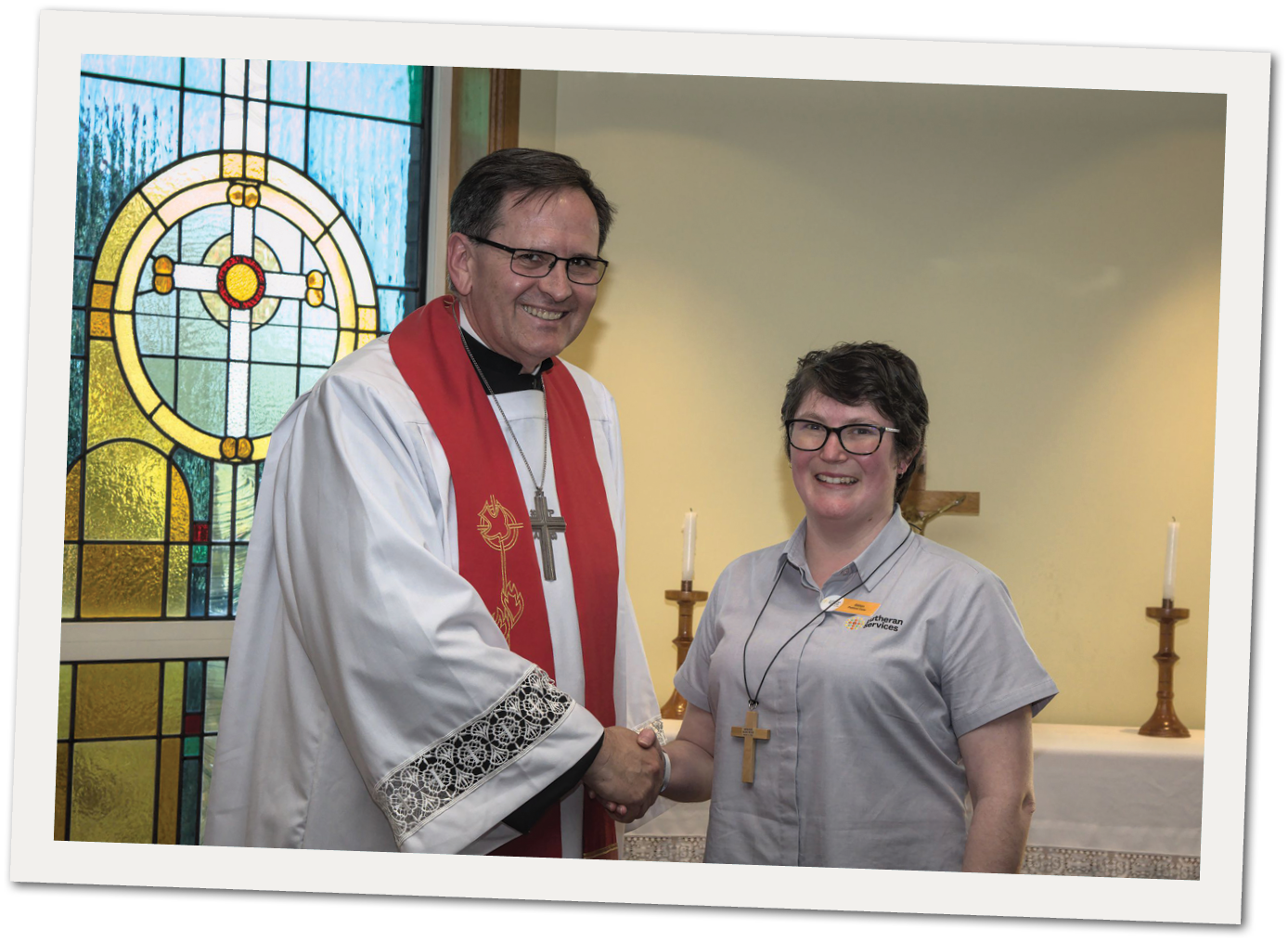
We were delighted to have LCAQD Bishop, Dr Mark Vainikka, and Assistant Bishop for Mission, Rev David Schmidt, join us at the Salem storytelling gathering in March 2025.  Bishop Mark reflected on his close connection with Salem and his fond memories of the community, drawing on his many years as a pastor in Toowoomba.

Assistant Bishop David shared a moving reflection and closing prayer – the perfect conclusion for our gathering and this Origin Story. These begin and end the many personal reflections we received for the Salem Origin Story.


Bill Cotter
Former Salem Board Secretary
Redeemer Lutheran Church Toowoomba congregation

I was Redeemer’s representative on the Salem Board for over a decade from the early 1990s. During that time, I served as Secretary and the Board Member staff could refer financial matters to when the CEO was not available. I came from a banking background and worked in the bank where Salem had their account. I also had customers who needed aged care accommodation and I was able to refer them to Salem.
I thoroughly enjoyed my time on the Board. I met longstanding members that I’ve been friends with ever since. When I first joined, each congregation had to nominate two members to the Board. The overall Board was top heavy and the meetings were long. Eventually this was reduced to one member per congregation. We discussed things like the general operation of Salem, the stalls that volunteers ran in Ruthven Street that raised additional funds for the home, and we even recorded the produce that was donated for the kitchen to use. It wouldn’t be allowed today, but back then we would have tonnes of chokos delivered each week!
When I first started, there were some concerns for night duty staff getting safely to and from their vehicles on the street. We bought a couple of houses on South Street and converted their backyards into a carpark with appropriate lighting to ensure their safety. We built and renovated three different wings at Salem in my time. One time, we secured government funding for a future project and whilst the CEO was on holidays, I temporarily placed the money in a term deposit. In those days the interest rate was in the high teens and as a result we were able to purchase a car for Salem so that the CEO didn’t have to use his own vehicle for work and meetings in Brisbane.
We also had two nursing sisters who visited elderly members from the various congregations, thus building a connection with Salem. My mother-in-law was one of those visited. She really enjoyed these visits, however I think these sisters might have had to endure lots of tea and scones!
I recall an occasion when the dietitian encouraged us to watch certain residents at the Christmas party. They’d hit the sweets tray, race back to their room, drop their gear off, come back and have another shot at it! We also had a situation where we couldn’t work out why the goldfish were dying. Then we found that tablets were being dropped into the fishtank!
In the early 1990s, opportunities were explored to further expand Salem to meet growing demand. A property in Holberton Street was set to go to auction. The Church Office was consulted and agreed to our budgeted amount. They asked me to go to the auction and guaranteed the sum we’d asked for. But I had no experience with auctions. ‘You’ll be right’ they assured me!
There were only two bidders – myself and the biggest accountant in Toowoomba at the time. He knew I was from the Lutheran Church and I knew he was from the Church of England.
The bidding got to my limit, and he kept going. The gavel came down and he had seven days to come up with the funds. Little did I know that he had not consulted his Church beforehand and they promptly said they were not interested in his idea for the land!
So it was offered to me as the only other bidder. Was I still interested? I said ‘Well, you know the last figure I proposed? Take $10,000 off that!’
The money we saved helped offset the work we had to do to remove contaminated soil and asbestos from the former factory site. I was appointed to the founding committee which oversaw the construction of the facility. That’s how Northridge Salem came to be. Some years later my brother-in-law needed care, and he became a resident for a short period of time.
What I learnt from my experience at Salem assisted me in providing advice when approached by friends and associates. Even after I’d left the Board, I had an occasion where I was visiting a friend in a state-run aged care facility. The staff followed me around so I could identify items for attention! They became the first Government facility to gain accreditation.
I learnt a lot from my time at Salem.

Rev Dr Russell Briese
Director of Chaplaincy and Ministry Development
Lutheran Services

I grew up in Toowoomba. I was baptised, confirmed and ordained just down the road from Salem in Hume Street at Trinity Lutheran Church. This congregation closed a few years ago, but looms large in Salem’s history. The extensive Trinity property – consisting of a church, hall, two houses and a large carpark – is now administered by Lutheran Services, with the possibility that Salem might one day be rebuilt on this site.
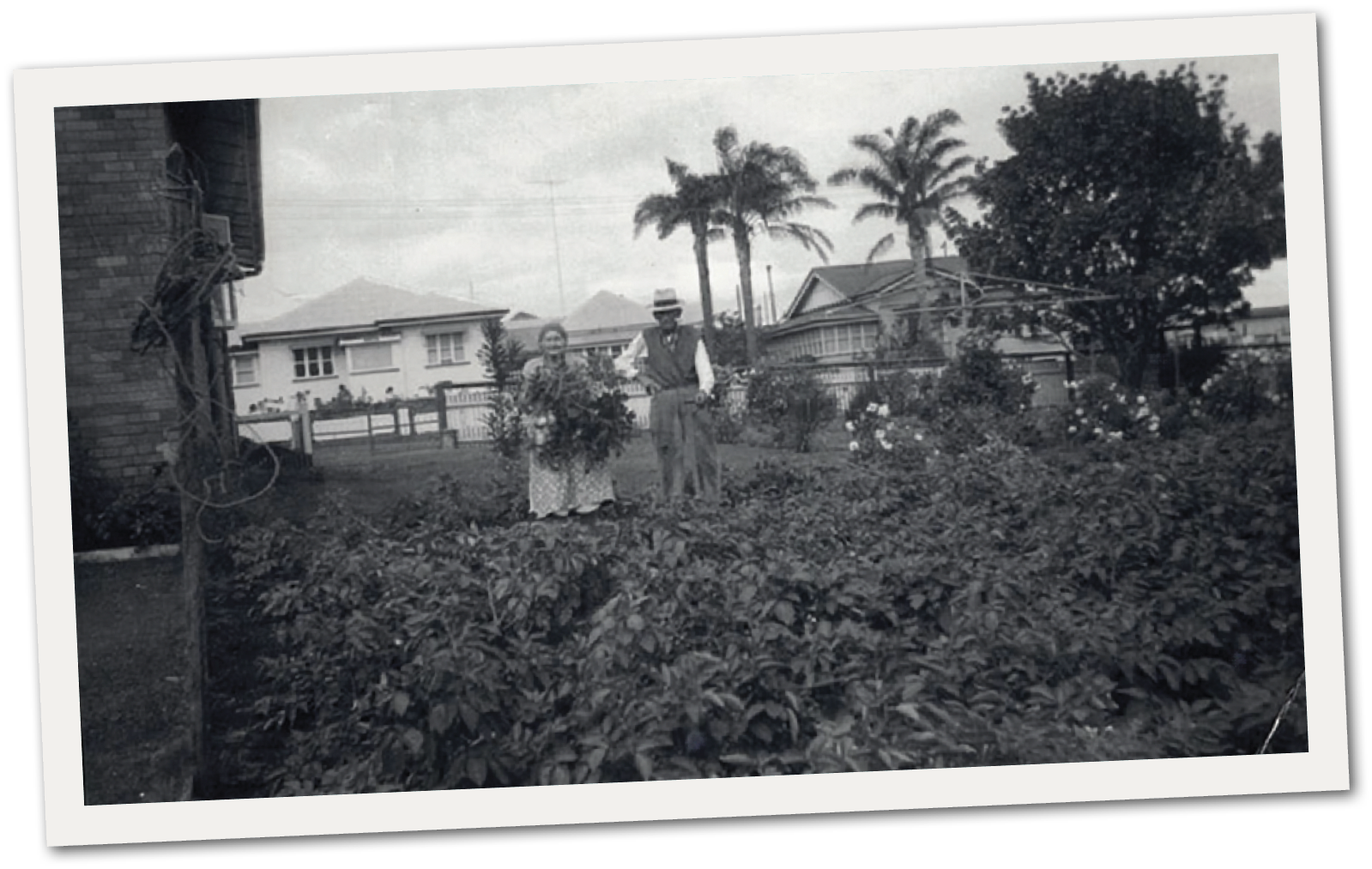
My great-grandmother Emilie Briese was a resident at Salem in the mid 1960s. When I started work at Lutheran Services, someone sent me a photo of Emilie tending the vegetable gardens at Salem. I often relate to my colleagues my personal connection to this place.
Salem – like most of our services in Lutheran Services – is a grassroots facility. It was the local people, congregations and communities who put their shoulder to the wheel and progressed it themselves. I remember in my childhood Salem was always cared for and revered by congregations in Toowoomba and the Darling Downs in general. Salem was the first of the LCAQD’s aged care facilities to be established, coming into being as a progression from a place for recuperation for missionaries working in Papua New Guinea.
I remember a big celebration as a teenager in the 1980s – the opening of a new area at Salem. It seemed to me a lot of people were there, and it was opened by the Queensland Premier at the time, Joh Bjelke-Petersen. Joh was himself a Lutheran and a farmer from the country, so he was well regarded on the Downs in those days.
Part of the DNA of aged care at Lutheran Services is the provision of paid chaplaincy services by suitably trained persons. Salem was the site which first transitioned to dedicated aged care chaplaincy. Pastor Marcus Schultz was the first pastor to be called to a specifically chaplaincy-based role. Marcus worked hard as a chaplain in conjunction with his pastoral duties at Trinity down the road. From there a full-time role at Salem was established.
In 2025, Lutheran Services has 19 chaplains – ordained, lay, full-time and part-time – providing quality pastoral care to all residents while being a beacon of the Lutheran faith and ethos which brought Salem into being.
It’s interesting to consider the name ‘Salem’ is short for ‘Jeru-salem’. Salem is a Hebrew word meaning peace. It’s related to the word ‘shalom’ – a greeting Jewish people have used for thousands of years that is familiar to us today. No doubt in naming this place ‘Salem’, the founders hoped that older people would find peace and tranquillity here.
While Jesus was born in Bethlehem, the real action of his life happened in Jeru-salem. Jeru-salem was the place where Jesus was crucified. It was the place of the empty tomb. The place where Jesus ascended into heaven. Jeru-salem was where the believers waited for the coming of the Holy Spirit.
That it was Jeru-salem where Jesus was crucified and rose again is the connection for this idea of peace. Our peace (our ‘Salem’) comes ultimately from the death and resurrection of Jesus in Jeru-salem – from the hope that Jesus brings for us all for eternal life with him. It is God’s hope and desire for us all to live in peace, in Salem.

Kevin Briese
Salem volunteer/visitor/entertainer
Good Shepherd Lutheran Church Toowoomba congregation (previously Trinity)

My grandmother Emilie Briese was a resident at Salem in the 1960s. There’s a photo of her tending the vegetable gardens at Salem.
My parents did volunteer work at Salem for many years. My father Albert was a carpenter and did quite a bit of work about the place. It was just one big timber house in the beginning. It’s grown a lot over the years. My niece Sue worked at Salem for 20 years, from the time she was a teenager in the 1980s. She loved the residents.
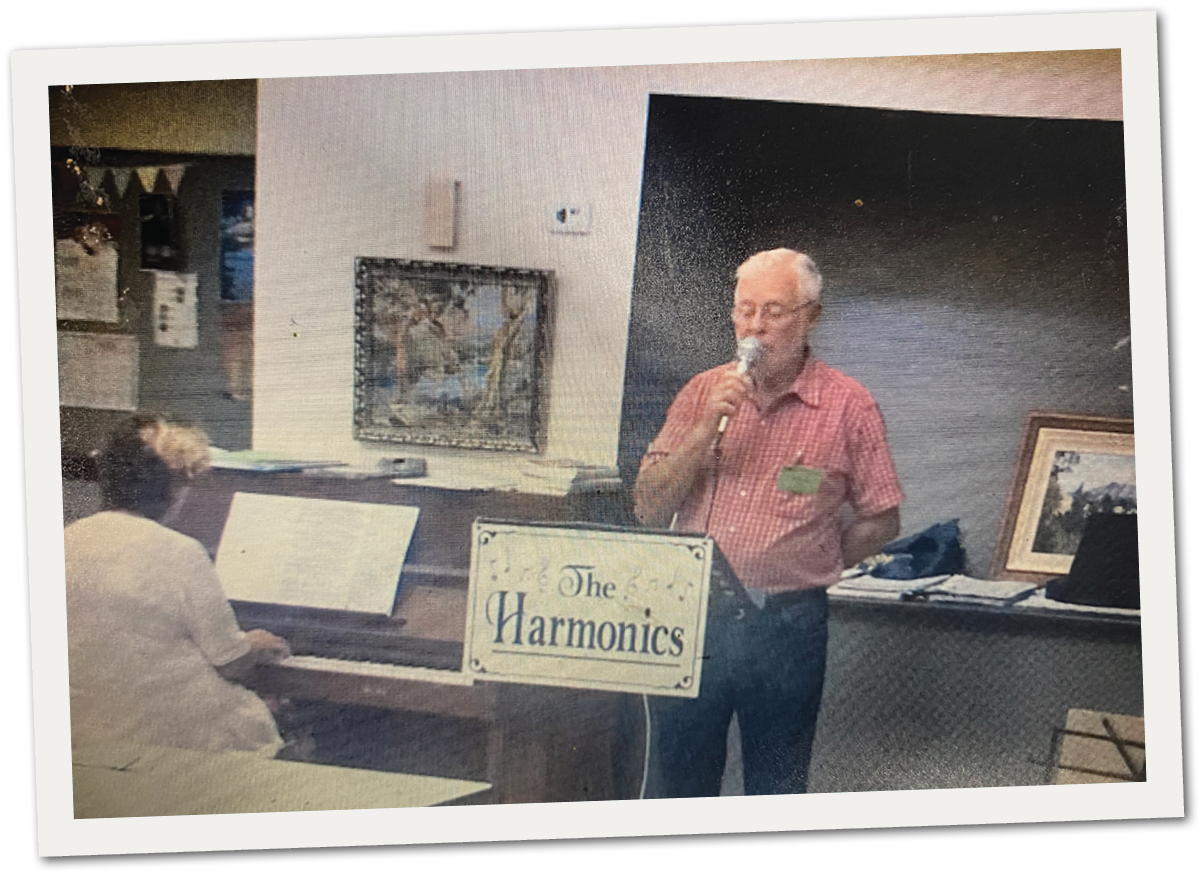
I was a volunteer and visited Salem for quite a few years from the early 2000s. I was part of a group called the Harmonics. We would visit the residents with a choir and music program. Lots of singing and socialising. Everyone had a good time.
Salem is such an important place of service for the local community. And local Lutheran congregations have played an important part in building that.


My husband Brian’s grandparents (whose family name was Horn) were among the early German settlers who started farming at Middle Ridge. They were married in the Lutheran church and doubtless acquainted with Salem’s early development as they lived nearby.
Brian’s parents (his mother from the Horn family) also settled in Middle Ridge. So Brian was very familiar with the area, riding past Salem daily on his way to school.
After we married of course we were regular visitors to his parents. I remember when the eucalyptus trees were planted on Hume Street, which would be about 70 years ago. I would visit Salem residents with my church congregation.
In 2022, Ann Hopper from Lutheran Services came to the retirement village where we lived to tell us about their wonderful services. Little did we know we would need them so soon.
In 2023, I became very ill and was hospitalised. Brian was initially taken into respite care at Salem and ultimately became a resident. He was very well cared for at Salem until his passing.
When I was released from hospital, I too became a Salem resident with a not very promising prognosis. However, with the excellent nursing care that I received, I recovered to be able to walk again and care for myself.
I have now been a very happy and contented resident of Salem for over two years, and have always been treated with great dignity and respect.

Anna Althaus
Salem resident
St Paul’s Lutheran Church Toowoomba congregation

Like Salem, I was born in the 1930s – even a little before Salem!
My mother-in-law, Katrina, or Kit as she was known, was a Salem resident from the early 1980s until she passed away in 2000 a few weeks short of her 102nd birthday. There was a big celebration at Salem for her 100th birthday. Kit helped run the resident canteen. They had indoor bowls and a lot of fun. I would visit Kit at Salem. I never imagined I would live at Salem one day.
I’m a member of the St Paul’s congregation, which has a long connection with Salem. Every year, friends and family would make a big Easter egg and bring it in on Easter Sunday. The residents loved to break off a piece and share it around.
I’ve been living at Salem for nearly three years now. I came here for respite care after a spell in hospital. I liked it so much, I stayed! The room was nice and comfortable. The place was warm and welcoming.
One night, I couldn’t sleep, so I pressed the buzzer. A carer came to check on me. When I said I couldn’t sleep, she made me a cuppa and something to eat. I thought, this is too good – I’m staying! That’s how I came to be a Salem resident.
I never thought I would be in aged care. I never thought I would get to this age! But I’m happy to be living at Salem today. I feel fortunate to be able to make the choice and have the care and support.

Edith Kowitz
Salem resident

I was born at Oakey on 24 April 1935. Very close to the beginning of our Salem Lutheran home!
My uncle Alick Kliese was one of the early Salem committee members. He had two sons, Albert and Noel, and a daughter, Joan, who married Roy Kohler. They had been associated with the Trinity Lutheran Church in Hume Street.
I have been a farmer all my life until I became rather helpless about three or four years ago. But I still lived at home for about another two years, looking after my dialysis problem with help from my brother Harold.
Then one day I needed to go to hospital at Toowoomba for quite a few weeks, and then to Oakey Hospital to be nearer to my brother. I had improved and thought I was ready to go home but the doctor said I needed more care than Harold could provide.
Salem had to be our first choice as we are Lutheran. On 17 January 2023, I became a resident of Salem. This is my home now. I am happy here. I’m proud to say I’m the same age as Salem! What do you think of that?
The care here at Salem is wonderful. There is plenty to keep us entertained. It’s a comfort knowing we are safe. I have made good friendships – we all check in on each other. I can come and go, or do as I like, when I like. The staff are always caring.
I cared for my father at home for 22 years before his death in 1996 aged 93. A mighty effort it was!
I had to go to hospital again recently and I couldn’t wait to get back home to Salem!

Keith Lawrence
Salem volunteer/visitor/entertainer
Toowoomba Community Baptist Church congregation

Kevin Briese and I were volunteer visitors at Salem providing entertainment for the residents. The daughter of one of the residents played piano and accompanied us. We did that every fortnight for almost 10 years from 2010. The residents enjoyed it. We enjoyed it. We liked to visit the residents with dementia who were often disconnected. They would tap their feet and hands to the music. Music has a way of connecting.

Sometimes we’d have a singalong with two or three other singers. We also had guitarists and accordion players and I play ukulele. I also ran bingo with chocolate frogs up for grabs – we’d get about 40 people along. But music was always the focus. I’ve been a thespian and a member of the Toowoomba Choral Society for many years. I’ve done many shows at the theatre in town. I love acting and singing – not that I’m that good at it! – but I enjoy entertaining people.
One time I suggested putting on a show for the residents. Our coordinator at Salem, Chris Gauld, thought The Sound of Music would be ideal. I thought this was crazy, but Chris was confident and offered to play Maria if I could play Captain Von Trapp. Sure, why not? We rehearsed for a couple of weeks and pulled the show together. It was quite a production. The Von Trapp children were played by staff – some of them in their 60s. It was pretty funny seeing them in pigtails and children’s clothing. I also played the delivery boy. The change room was a toilet. It was hilarious.
Blow me down, about 100 people came to see us – residents, family and friends. It was absolutely packed – there were people standing in the corridor. We sang all the songs. The only thing that was missing was the hills – we couldn’t fit them in the lounge – but the place was certainly alive with the sound of music. It was epic.
The show went for an hour and a half. It was summer and when I went to change from the delivery boy to the Captain, I was so soaked with sweat, I had to get help to get my shirt off. I was absolutely knackered afterwards. Despite the aged performers and ludicrous casting, it was a big success. We sang our hearts out. Everyone loved it. They clapped and clapped.
We always had a great team at Salem. The personal carers were the real stars of every show. They helped get everyone along and make things happen. They really loved the residents. It’s a credit to them and Salem.

Following is the closing prayer shared by Assistant Bishop David at the Salem storytelling gathering in March 2025 – the perfect conclusion for our gathering and this Origin Story.

Rev David Schmidt
Assistant Bishop for Mission

It is a privilege to hear the reflections of those with connections to Salem, both historical and current. It is these connections, and the work of the congregations over generations, that have helped build Salem and Lutheran Services to what they are today.

Let us pray.

Loving and faithful God,

We thank You for this time together, for the stories shared and for the history that has shaped this place of care and compassion. As we have listened to the journey of this aged care home – its humble beginnings, its challenges and its blessings – we recognise Your guiding hand in all things.

Lord, You have called us to be a people of love, hospitality and service. We give thanks for those who have gone before us, whose vision and dedication laid the foundation for this place. We give thanks for those who serve today – staff, volunteers, families and residents – who continue to embody Your grace and kindness.

May the legacy of care and dignity continue to grow, shaped by Your wisdom and sustained by Your strength. Bless this place and all who call it home. May it remain a sanctuary of peace, where love is shared, stories are valued and life is honoured at every stage.

As we go from here, may we carry with us the spirit of gratitude, the call to serve, and the assurance that You walk with us always.

In Jesus’ name, we pray.

Amen.


From the archives

Our Lutheran Rest Home “SALEM”, Toowoomba

Lutheran Herald, October 1923

Nestling on the hills 2100 feet above sea level is the beautiful inland city Toowoomba. Its salubrious air and picturesque scenery make it a first-class health resort of Australia and many tourists are attracted from far and near.

It is here where we have our Lutheran Rest Home, it stands amongst attractive and healthy surroundings. It is here where our Missionaries with their families recuperate from their bodily infirmities caused by a long stay in the tropical climate of New Guinea.

Since the opening of “Salem” many Missionaries have stayed there and have enjoyed their stay. Our Queensland District Synod has provided this home for the Missionaries and has held it a sacred duty to make it a real home for them.

It was thought that if each family in our Synod would contribute £1 towards the Rest Home it could be paid off straight away. I am sorry to state that this has not been done. As you will see from the financial statement below the income with regard to the purchasing fund as well as the upkeep fund is far below expectations.

I had not the heart, however, to appeal to our Queensland members of the Lutheran Church as we, especially on the Darling Downs and out West, are in the grips of a most dreadful drought so that the prospects are very dark indeed. We have no crops of wheat, no grass in the grass paddocks; sheep, horses and cattle are dying, there is no hope of getting any early corn, nor potatoes, nor vegetables, nor lucerne, nor anything.

And yet people have to live and support their families and their Church and their Mission and the Lutheran Rest Home. The kindness of some friends of the Lutheran Rest Home is indeed touching, they give and they do not let the left hand know what the right hand is doing.

By the end of 1924 we must wipe out the debt of £600 still on the house. How are we going to do it? Who will help? Who in this time of drought has still a contribution to spare, let him come forward and bring his donation to his Pastor who will forward it to me. As it is now, we have to pay interest on the loan to the amount of over £30 annually.

And what about the Upkeep Fund? Do you know that this Fund is almost exhausted? During the Advent season we shall again have a collection in our Queensland District in aid of this Fund. Will you my friends do your best for it?

May God bless all those friends who have shown their love and sympathy to our Missionaries while on furlough and may the Lord in His kindness reward those who, in this hard time, have still something to spare for the Lutheran Rest Home at Toowoomba.

EVH Gutekunst


The Lutheran Rest Home “Salem”, Toowoomba

Lutheran Herald, November 1942

A clean, comfortable little room, which one can call one’s own, a sunny verandah, a garden under a shady tree, wholesome and well-cooked meals, a large cosy common room in which is an organ and a wireless set, and where religious are regularly held once a week, the sympathetic supervision of an efficient matron and the controlling committee – such is the lot of the people who live at “Salem” the Lutheran Rest Home of 280 Hume Street, Toowoomba, Queensland.

It is interesting to know how this home came into existence. The “first” Salem was purchased on the 5th of September 1922, for £1,085. It was then used as a Rest Home for New Guinea missionaries on furlough. Later, it was decided, when it was no longer required for that purpose, to make it into a Rest Home for old people. As such, “Salem” was opened on the 1st of December, 1935.

The home was really much too small for the number of people who wished to take advantage of it. It was then decided to build a new home on the site of the old one.

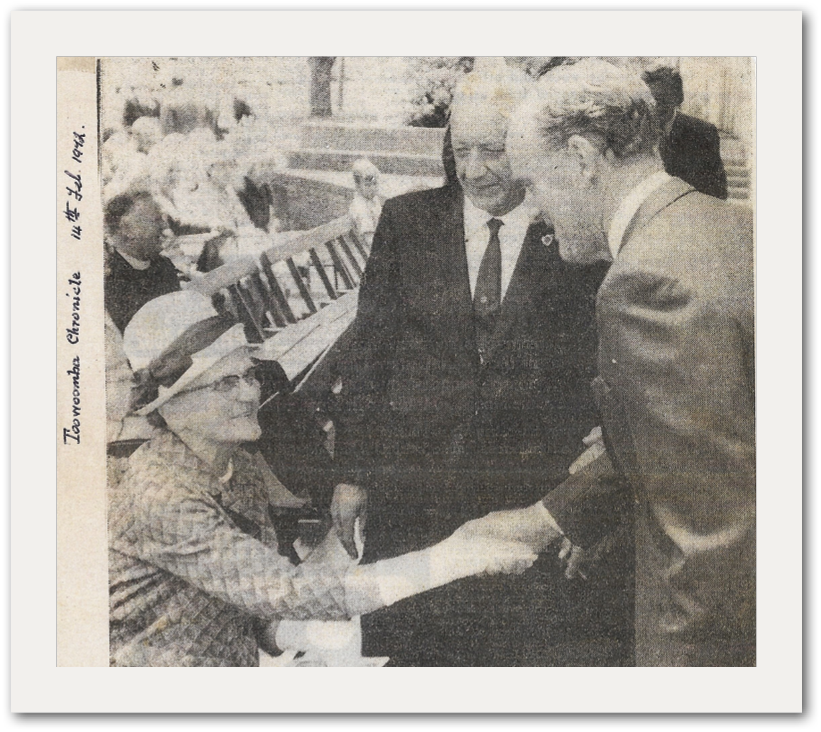
This was made possible by the generosity of the late Mr. C. L. D. Wittenberg and the various congregations who benefitted by his bequest. These Darling Downs congregations gave their second instalment of the Wittenberg bequest towards the Rest Home’s Building Fund; and the result was that, when the building was complete; only £108 5/7 was owing on the building cost of £1,200. Some generous gifts of furniture from individuals and from ladies’ guilds were very thankfully received. On the 14th of February 1942 the new home was opened and dedicated by Pastor H. Prenzler, the vice-president of the U.E.L.C.A., Queensland district. In his address he stated:

The home was an institution of the Church and stood for the highest ideals. After the bodily needs of the inmates had been attended to there was something more. There remained the need for rest for both body and soul, and rest of the soul in God. Lutherans had provided the institution so that they could lead old and suffering people to that rest and peace which the world could not give but which was to be found in Christ alone. They also aimed to prepare them for that home in the world to come. These were the higher ideals of the home. He hoped that all those who were concerned with the home would realize that besides attending to the bodily needs of the inmates, there was also the solemn and sacred duty to lead the inmates to the experience of Christ and His Cross.

The work that the Lutheran Church was doing in the Rest Home was similar to that it was endeavouring to do all over the country in all its branches. It was to see that Christ was preached and brought into the homes and lives of the people of this country, and to give them that peace and rest which could not be found in this sin-cursed world. In the face of threatening clouds, they need have no fear. All that they might lose in this world through the destructive power of war was only temporary. The things that were high and eternal they could not lose. In the face of the dangers through which their country was passing, all Christians must remember the injunction of Christ: “Render unto Caesar the things that are Caesar’s and unto God the things that are God’s.” Their Church was standing on this principle, and would continue to do so in spite of all they might have to meet. In that faith Lutherans felt united and could calmly face all that was before them.

During the years “Salem” has been used as an old people’s home, thirty-two people have been cared for there, for shorter or longer periods. At present there are twelve inmates (six men and six women). The committee of the Rest Home meets monthly to discuss the welfare of the inmates and of the home. It is a labour of love, done in the name of Christ, providing a Christian home for our old and infirm people.


“Salem” Lutheran Rest Home Toowoomba

The Queensland Lutheran, 1957

With truly grateful hearts to God we submit this review of the work at our Rest Home. The Home has been fully occupied at all times, and we have a waiting list. The health of the inmates is very good, also that of Matron Mills and her staff. Local congregations have a busy bee now and again to attend to various matters. The Downs ladies keep the home well supplied with home-made biscuits, which are always appreciated. Local guilds, C.W.A. Branches, and the local Radio Station entertain the inmates through parties and concerts, giving gifts to those in the Home. There are at present 24 women and 10 men in residence. The men keep a very good vegetable garden.

We received a wonderful response to the circular we sent out to all our guilds. The committee sincerely thanks all those who sent gifts. Quite a number of guilds sent donations of money, others goods in kind. We received 63 face towels, 176 pillow cases, 24 sheets, 4 hand towels, 194 tea towels, 33 face washers, table cloths, eiderdowns, pillows, cushions, blankets, jug covers, lace doyleys, etc. Vegetables, tinned goods, jams, pickles, honey, soaps, soap powders, etc., were also received with many thanks to all kind donors. We ask you to remember the Home at all times, with your prayers and with your gifts, so that we can give to our aged people that little extra that they need for comfort.

The late Mrs. Matthies of Silverleigh left a legacy of £200 to the Home, for which we are truly grateful. The Lutheran Women’s Association of the Darling Downs Division gave £365/6/6 towards furnishings.

On behalf of the Rest Home Committee, we wish to thank one and all for their kind response to our appeals. May God reward them and bless our Home and those that live and work there.

(Mrs.) MAVIS ERBACHER, Secretary

Lutheran Rest Home “Salem” Toowoomba

The Queensland Lutheran, 1964

An 80 mile drive westwards from Brisbane on a fine highway brings us to the beautiful provincial city of Toowoomba, situated with its spacious parks, gardens, excellent shopping centres and 15,000 houses on the rounded ridges and gentle valleys of the Great Dividing Range. We turn into the lengthy Hume Street, with its impressive avenue of Plane and Camphor Laurel trees, past the 77-year-old Trinity Lutheran Church to our destination – “Salem” Lutheran Rest Home.

Let’s ask some of the local people connected with this Home for the Aged about its beginnings, growth, staff and administration, problems and future.

Its begining

On one of his frequent visits to the home we find Pastor E. V. H. Gutekunst, who is able to fill in some of the past history of the Home. He relates: “Not many of you will remember the time when we first bought the Home. It was to be a home for our New Guinea Missionaries who, after the First World War, could not go back to their homeland, and yet were badly in need of medical overhaul and furlough. The Home here in Toowoomba was bought in 1922, 42 years ago, for the sum of £1,085, which amount was received in donations, in loans, and partly from rent received from the New Guinea Mission Board.

“At the 1935 Synod, held at Dugandan, it was decided that the Mission Home, which was no longer required for its original purpose, be converted into an Old Folks Home, and called the Lutheran Rest Home, “Salem,” Toowoomba. A committee to manage the Home was elected, and steps were taken to convert the place into an Old Folks Home. On 1st December, 1935, the Home was solemnly dedicated for its special purpose. The President of Synod, Rev. A. R. Reuther, opened the Home in the Name of the Triune God. Special guests at the opening were The Premier of Queensland, the Hon. Forgan Smith; the Mayor of Toowoomba, Alderman J. D. Annand, and others. The Home attracted old people from different denominations.”

Its growth and development

Pastor Gutekunst continued with his narrative: “In 1937, at the Synod held at Goombungee, the Rest Home Committee was authorised to enlarge the building and thus provide more accommodation. The contract price for the two new wings to the Home was £1,200. At that time there was no Government subsidy for Old Peoples’ Homes, so the amount of £1,200 was raised mainly by the congregations of the Darling Downs which generously donated a substantial part of their share of the Wittenberg legacy. £1,141 was contributed by the congregations so Synod was not burdened with any requests for donations.

“From time to time other alterations and additions were made to the Home, e.g. enlarging the kitchen and adding more rooms for guests. The verandahs were glassed in, a large dining room was built, the reception room was extended, and the necessary comfortable chairs acquired.

“When in 1955 the neighbouring property was available, the committee bought it and turned it into a Men’s Home. The necessary alterations were made and the Men’s Home was opened on 23rd October, 1955. It was further thought necessary to erect two brick maisonettes. These, together with a new Dining Room of the Home, were opened on 13th December, 1959. When another house adjoining the Home became available the Committee bought it and converted it into a Sick Bay, where the sick of the Home received special treatment by Doctors, a trained Sister, and her assistants.”

Its administration and staff

We are pleased to meet the busy Matron of the Home, Mrs. Gwynne, who gladly conducts us through the main sections of the Home. She obviously loves her work, and is held in high regard by the inmates. Matron introduces us to the Chairman of the Committee, Mr. Otto Radke, who informs us: “The Home is administered by the Queensland District Synod through a Committee comprised of representatives of the Toowoomba congregations. The Committee’s work is made much easier because of a capable and efficient staff led by Matron, who has been with us for about 5 years, and assisted by the Deputy Matron, Mrs. Denny, together with 6 domestic assistants and a handyman. The Sick Bay is on the southern side of the grounds, and there Sister Dorr and two assistants and a domestic helper endeavour to provide the extra care for sick members of the Home.”

From the Secretary of the Committee, Mrs. N. Erbacher, whom we are fortunate to meet at the Home on this occasion, we learn: “At present our Home accommodates 47 aged folk. There is generally a waiting list of up to 10 applicants. The Home is held in high regard in the community, and we regularly publish a list of donations in the local paper. We have had excellent support from the public in the past. For example, “Aunt Dorothy,” formerly of 4GR, was instrumental in raising the funds to provide a piano for the Home a few years ago. The South Toowoomba Rotary members showed their support by placing a television set in the lounge several years back.”

As it is Thursday, “Pension Day,” we find Mrs. B. Brindley, the Treasurer, busily attending to the money matters. She informs us: “We are very grateful to the Commonwealth and State Governments for the subsidies received since 1955. Without these subsidies, which to date have amounted to £23,428, we could never have established this Home, nor could we run it without much more private support.”

As we walk around the spacious grounds of approximately an acre, we note the well kept lawns and gardens, and are impressed with the neat and tidy appearance of the whole area. It is a tribute to the excellent work of the handyman, Mr. Denny. We are pleased to come across Pastor M. Reuther, of Highfields, the Chaplain to the Home, making one of his regular visits to the Home.

Both Sister Dorr and Matron tell us how much the inmates appreciate the regular Sunday services conducted by Pastors Grope, Neldner and Reuther on a monthly basis. In our conversations generally we come to the conclusion that here is a Rest Home that has a spiritual tone, and that it has a fine quality of homeliness and friendliness. In no small measure is this due to Matron Gwynne who has a deep personal and spiritual concern for all.

Its problems

One might have imagined that this home could have no major problems, but right now we can see that the replacement of some buildings is a necessity. There are two chief reasons why the present Men’s Section and Sick Bay need to be replaced. The Men’s Section is a converted old house, which, although it has served a very useful purpose, no longer meets the requirements for housing old folk. Brick or brick veneer buildings are now required, and the rooms generally must be larger. The Sick Bay is likewise affected by new Government regulations which came into force a year ago, and, although it met the requirements when first registered as a Sick Bay, it must now give way to a more suitable type of building. The new regulation limits the number of sick beds to 4 per ward.

The Committee has been informed that, if the Home is to continue to benefit from Government subsidies, the various sections of the Home must be brought up to the present standard. Other similar Homes in Toowoomba have had to be modified, and the new Homes for the Aged recently established have been built to comply with the new standards.

Committeeman Frank Wilks, who has interviewed the Federal authorities, tells us about the plans of the Committee to overcome this problem. “In our discussions with those responsible for approving permits and subsidies for Rest Homes, we were guaranteed a subsidy of £2 for every £1 we provide for approved Rest Home buildings. The State Government will also provide much assistance for furnishings. The unit we propose to erect would replace the existing Men’s Section and Sick Bay, and would be a brick building to provide accommodation for about 18 men, a much-needed Sun-Room and Occupational Therapy facilities, Office and Staff Quarters, and a new Sick Bay with some 18 beds. The total cost of this unit would be about £60,000, of which the Government will provide £40,000 if we can find £20,000.”

Mr. Wilks, however, emphasized: “This is not a major expansion programme, but primarily the erection of new units to replace existing ones, with only a relatively small increase in the overall accommodation. We do not want to lose the homely atmosphere of “Salem” by making it a huge institution.”

Salem Lutheran Rest Home A brief history

50th anniversary, 1985

“Salem Lutheran Rest Home” was established for senior citizens from all sections of the community, in a cottage in Hume Street, in 1935. Its real beginning, however, was earlier … in late 1921, when at a Church Committee meeting at St. Paul’s, Phillip Street, Pastor E Gutekunst emphasised the need for a Recreation Home for New Guinea missionaries. Though these men greatly needed a holiday, they could not visit their homeland at that time.

The Mission Board saw fit to purchase a house, for Synod, at the corner of Hume and Cranley Streets for that purpose, for the sum of 1085 pounds. Pastors G. Heuer, E. Gutekunst and and their wives were appointed as a sub-committee of the Board to control it.

When the house was no longer needed, it was let to private people, with some success. However, a later committee, influenced by Pastor Heuer, felt that it should be used either for an Old People’s Home or for a Convalescent Home. Synod at Dugandan in 1935 appointed and authorised the then Rest Home Committee to take the necessary steps to establish an Old Folks’ Home.

The first meeting of this founding Committee was held in the St Paul’s vestry in May, 1935. Members were: Pastors A. Simpfendorfer, E. Gutekunst, & H. Prenzler, & layman Meisenhelter. This Committee immediately expanded, to be known as “The Larger Committee”, and endeavoured to meet about every three months. Besides the foregoing members, the Committee included the wives of the above members, and a representative from each Darling Downs Parish of the “United Evangelical Lutheran Church in Australia.”

At its second meeting in July of the same year the name “Lutheran Rest Home, Salem” was adopted, though it seems that the names “Salem” and “Rest Home” were used earlier.

A set of rules drafted by Pastor Gutekunst was referred to the appointed Executive for examination and for any amendments. A House Committee was also appointed; attention to legal matters was entrusted to Pastor Heuer.

A decision to open the Home officially on 3rd September 1935, for some reason did not eventuate, and solemn dedication took place on 1st December 1935. The Premier of the State, the Hon Forgan Smith, the Mayor of Toowoomba, Ald JD Annand, and many others were present when the President of Synod, Pastor AR Reuther, officiated. Thought capable of housing 11 old people, a matron, and a maid, Salem opened with 4 residents – or inmates, as they were then called.

The Home prospered, and at Synod at Goombungee, in 1937, the Committee was authorised to extend the building to provide more accommodation. Two new wings were built on to the original cottage at a cost of 1200 pounds. Darling Downs congregations, who had benefitted under the will of the late Mr Wittenburg, donated 1141 pounds, which was a substantial part of their share. This, with Ladies’ Guild and individual gifts, make the venture possible.

In 1955, there were further additions. These included the purchase of the Meisenhelter family home next door to the original house. New wings included four bedrooms, ablution units, bathrooms and a laundry. All this provided for another 16 persons. At the dedication of the extensions, costing 8,000 pounds, Senator Annabelle Rankin, on behalf of the Federal Government, presented a cheque for 850 pounds – the first part of a Commonwealth grant of 913 pounds. The cheque was accompanied by a congratulatory letter from the Minister for Social Services, Mr W McMahon. President FH Schmidt gave the dedicatory address.

Four years later, in 1959, further extensions costing about 1800 pounds were made. These consisted of a new kitchen, dining room, domestic quarters, store rooms and two double maisonettes. Pastor JG Stolz performed the dedication; President FH Schmidt gave the address.

In 1961, the residence of the late Mr Alf Meisenhelter, on the corner of Hume and South Streets, was bought and converted into a sick bay to cater for eight persons.

In 1968, the men’s quarters, set up in 1955 and now sub-standard, were replaced with a new wing to accommodate 18. A sunroom was also added, the total cost being over $100,000. Now the Home could care for 18 men and 32 women.

The Pastor EVH Gutekunst Memorial Nursing Home is a lasting memorial to a recognised founder of Salem, and was built in 1972, to replace the Sick Bay established in 1961. The project cost approximately $104,000, and was subsidised by the Federal Government on a 2 to 1 basis. The State provided a 1 to 1 subsidy for soft furnishings. Pastor FH Schmidt performed the act of dedication, and Mrs Gutekunst, wife of the late Pastor, who died in 1966, unveiled the Memorial Plaque.

It is of interest that the new Nursing Home was the final result from an earlier Memorial Fund and a public appeal, which was the first made in the 32 year history of the Home. Also, this extension was to be the last major project of Salem and was to complete the Home, as envisaged in the Master Plan.

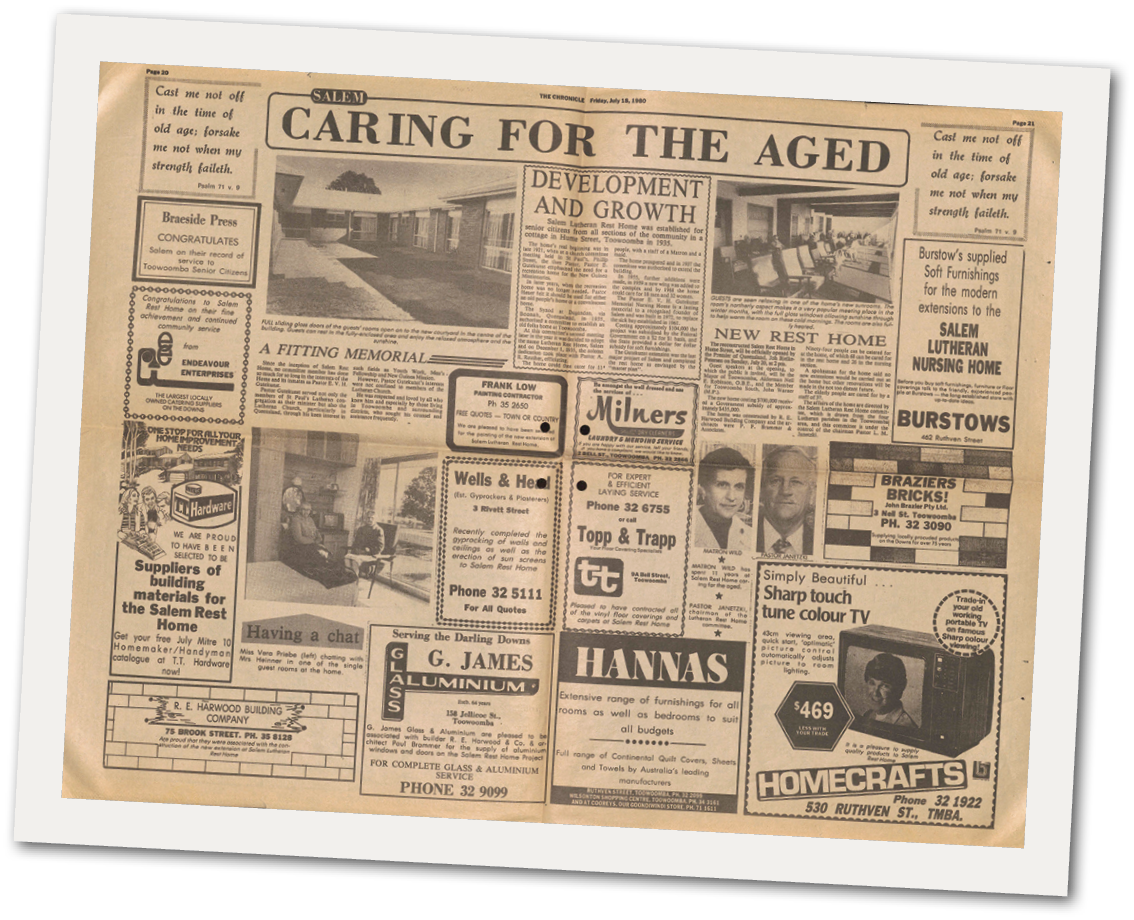
However, in 1980 further extensive extensions were made and these included a large lounge room, 4 sun rooms and 44 bed-sitting rooms, all at a cost of $700,000 and which had attracted the subsidy of $450,000 from the Federal Government. The State Government provided the furnishings. These extensions were officially opened on 20th July 1980 by the Qld Premier the Hon J Bjelke Petersen and the dedicatory address given by Pastor AH Koehler. Later landscaping of the grounds greatly enhanced the appearance of the whole area.

In 1981 the Committee sought approval from the Health Department to establish a Physiotherapy and Occupational Therapy facility. This was granted with some conditions. In 1982 five preliminary drawings, presented by architect Mr Paul Brammer were considered, and the one approved by the Committee and eventually accepted by all authorities concerned included the new Therapy Section, toilets, walkways and extensions to the Nursing Home lounge as we know it today. The Social Security Department had agreed to subsidise the project by two-thirds, and the work done by Mr J Lyons at the cost of $87,000 was opened and dedicated by Pastor Koehler on 23rd October 1983.

Earlier in 1983 the separation of the Rest Home and the Nursing Home was effected. Sister Clarke was appointed as Supervisor of the former, and Sister Wild – previously “all over Matron” – of the latter. The present Rest Home Supervisor is Sister Arnold, since 25th October 1985.

And now, in 1985, two adjacent properties, in South Street, have been purchased and hopefully will figure in the future developments of our Salem Lutheran Rest Home.

So Salem completes 50 years of service in providing care of the aged and infirm for all sections of the community. Some credit should be given to the dedicated controlling committees down the years, the support of the various facets of the Lutheran Church and others, also the Federal and State Governments for their subsidies. However, our true thanks must be to Almighty God who has so richly blessed the endeavours of all those concerned.

Special visitor helping with Salem anniversary

Toowoomba Chronicle, 2 December 1986

The daughter of Salem Lutheran Rest Home’s first matron was in Toowoomba yesterday to help Salem celebrate its 51st anniversary.

Mrs Belle Kershaw brought back memories for some of the older Salem residents as she recounted the rest home’s humble beginnings.

She came from Adelaide to present a photograph of her mother, Matron Mary Hanley, and Salem’s original six residents: Mrs Simonsen, Mrs Wagner, Mr Vogel, Mrs Trapp, Mr Henrickson and Mr Kraatz.

Salem was an old house on the corner of Cranley and Hume streets when Matron Hanley launched the rest home in 1935.

She recalled how she and her mother spent three weeks getting the old house ready for the first six residents.

“In those days we had a rule that residents had to bathe at least twice a week.”

She said her mother could not work out why one old resident, while insisting he had had his baths, always looked and smelt the same.

“One day she peeped in through the door and saw him sitting on the edge of the bath and swilling the water with his hand.”

Matron Hanley told him that if he was not in the bath in five minutes she would personally undress him.

“We never had any trouble from old Mr Vogel after that,” Mrs Kershaw said.

Matron Hanley was forced to retire from Salem through bad health in 1937.

“I am delighted to see the fruits of her labour,” Mrs Kershaw said.

“This would have been a very proud day for my mother to see how this institution has grown from its humble beginnings.”

Salem now caters for 95 residents.

Perhaps by special coincidence, Mrs Kershaw celebrates her birthday today.

Former nurse and resident leaves legacy

Toowoomba’s Mail 15 August 2013

Merle Schelberg was part of the fabric at Salem Rest Home – and now her legacy will live on.

When she died in 2011, the former nurse and later resident left Salem a donation of $50,000, which has been used to build a 20-seat cinema for residents.

The new cinema was opened last week.

Starting in the first group of nurses at the home in 1935, Ms Schelberg was on staff for many years and a volunteer on the Salem Committee of Service for nearly two decades, before coming to live at Salem as a resident.

Ms Schelberg’s sister, Jean Brown, opened the $130,000 Merle Schelberg Room yesterday and said her sister had always had “a love for Salem”.

Facility general manager Terry Arthur said Ms Schelberg had cared about older people for her whole life.

“She was a lifelong presence here and a very special lady,” he said.

“She became a resident and still had a lot of input into life at Salem. The bequest was quite a surprise.

“She was a lady of trust and she knew the money would go to where it was needed.”

The home’s quality manager, Judith Bannerman, said the home’s 101 residents were excited about now being able to watch movies on the big screen.

“Merle was a dedicated volunteer as well as being on staff for a number of years,” she said.

“She believed in service within the community and now the other residents will really benefit from her generosity.”

The Sword of the Spirit: A History of St Paul’s Lutheran Church Toowoomba

The Mission in New Guinea

An immediate impact of the war was that Germany was stripped of her colonies and the Lutherans in Australia became fearful about the effect this would have on mission work in New Guinea. The Lutheran missions in New Guinea had already been weakened by the enforced separation from their German bases such as Neuendettelsau which had control of the Finschhafen mission. However the Australian Government needed to be convinced that the Lutheran Church in Australia was strong enough to control the Lutheran missions in New Guinea if control was handed to them.

The result was that many people saw the need for the various synods to amalgamate to form one united church in Australia. St Paul’s, under Pastor Gutekunst, had already rejoined the Evangelical Lutheran Church of Queensland and this synod, in turn, joined with the United German and Scandinavian Synod to form the Queensland District of the United Evangelical Lutheran Church in Australia (U.E.L.C.A.) This led to a Union of Synods under the name of United Evangelical Lutheran Church in Australia. The Queensland District of the U.E.L.C.A. was officially established at a Synod held at Kalbar in 1921. At this synod Pastor Gutekunst was elected Secretary of the Synod, while Mr. J. Donges was appointed as Secretary of a new department called the “Lutheran Settlers Committee” charged with the work of assisting Lutheran land seekers to settle in the vicinity of existing churches. This work was later absorbed by the Home Mission Committee.

Then, after much anxious negotiation with the Government of Australia it was agreed that three parties should control the Lutheran Mission in New Guinea. These were the Neuendettelsau Mission in Germany, the Evangelical Lutheran Synod of Iowa (USA) and the U.E.L.C.A.

Salem Rest Home

From the outset Australian Lutherans of the U.E.L.C.A. were more than ready to accept the responsibility for the New Guinea Missions and young men and women ventured from Queensland to assist with the mission work. Many serving missionaries and their wives had been cut off by the war from their home societies but had faithfully carried on their work under great difficulties. At the end of the war many were in need of rest and as they were not able to go to their homeland there was an urgent need for them to take furlough, preferably in Australia. St Paul’s Church therefore offered their school cottage in Phillip Street as a Mission Rest Home where New Guinea missionaries could rest and recuperate. It was, however, too small, so a Synod committee was set up to investigate alternatives. The committee, consisting of three Toowoomba Pastors and their wives, purchased a house at the corner or Hume and Cranley Streets for £1085 in 1922. This Mission Home was called “Salem”.

The Christian Book Almanac had this to say about “Salem” when the first edition was published in 1924.

Nestling on the hills 2100 feet above sea level is the beautiful inland city of Toowoomba. Its picturesque scenery and its salubrious air make it a first class health resort of Australia. It is here where the Lutheran Church has provided a Rest Home for the Lutheran Missionaries of New Guinea.

After the war was over and the Lutheran Mission in German New Guinea was handed over to the Lutheran Church of Australia the responsibility faced the Australian Lutherans to find for the Missionaries (who during the war were penned up at their posts without any opportunity of furlough) a quiet corner in which they might regain health, strength and courage for their life’s calling. For this purpose the Queensland District Synod bought a furnished house in Toowoomba, named it “Salem” and placed it at the disposal of the Missionaries.

A house fitted out in a similar manner in Lights Pass, South Australia, serves the same purpose.

There are 80 men and women labouring in our New Guinea field. Their hard work in places where once murder and cannibalism were the order of the day, together with the unhealthy climatic conditions, relentlessly undermine the health of these workers in the Lord’s vineyard, and they are in urgent need of recuperation. For some years to come there is not likely to be any scarcity of overworked members of the mission staff who need furlough.

There is still a debt of £600 to be paid off on the Rest Home; the Mission Committee will most thankfully receive donations towards this fund. Towards the upkeep fund a voluntary offering is made in the Lutheran churches during the Advent Season.

When Salem was no longer required for New Guinea Missionaries, many pastors and laymen, especially around Toowoomba, raised the possibility that it could be used as an aged persons home. When the proposition was raised at the 1935 Synod, members authorised the committee of “Salem”, consisting of representatives from Trinity, St John’s and St Paul’s to take the necessary steps to convert “Salem” into an Old People’s Home. From these humble beginnings “Salem” grew to be the well regarded Aged Persons Facility it is today.

Richard Waite, 2002

Pastor Ernst Victor Hermann Gutekunst 1883–1966

Pastor E. V. H. Gutekunst was born on 29th May, 1883, in Nagold, Wuerttemberg, Germany. At the age of nineteen he entered the Basel Mission Seminary and, in a six year course, prepared himself for the ministry. After a short stay in London, he was ordained in his home church on the 10th of May, 1908.

He accepted a call to serve the Lutheran Church in Australia, and, in July 1908, he travelled to New South Wales, where he was inducted into the parish which comprised Milbrulong, The Rock, Wagga Wagga, Temora, Uranquinty, Forbes and Gilgandra.

After three and a half years’ work in New South Wales, Pastor Gutekunst accepted the call to St. Paul’s Lutheran Church, Toowoomba, where he was inducted on 21st of January, 1912.

As preacher, teacher, helper and friend, he served St. Paul’s parish for over 45 years. He helped to form the United Evangelical Lutheran Church of Australia, was a member of the Hope Vale and the New Guinea Mission Boards, was the founder of the Queensland Lutheran Youth movement, and of the Men’s Society.

He was a major part of the team which compiled the first “Australian Lutheran Almanac” and for a number of years he was the editor of the “Children’s Friend”. He became known to his young readers as “Uncle Victor.”

Following the end of World War 2, Pastor Gutekunst identified himself with the “New Australian” immigrants who arrived in Australia from Europe and introduced “New Australian” church services in Toowoomba. He also served as a Chaplain on one of the immigrant ships sailing between Europe and Australia.

Pastor Gutekunst was on the committee which worked to establish “Salem” Lutheran Rest Home in Hume Street, Toowoomba and always took an interest in the work of the home.

He also took an active interest in the welfare of the city of Toowoomba, and was a member of the Ministers’ Fraternal, the Social Service League and the Toowoomba Historical Society for many years.

Under his influence and guidance the congregations of Oakey, Linthorpe and Clifton were formed and he also assisted in serving the congregations of Millmerran and Glenarbon.

Following his doctor’s repeated advice, Pastor Gutekunst resigned from active service in December 1957.

In 1958 he was able to celebrate the Golden Jubilee of his ministry. His former parishioners made it a happy occasion for him. His interest and passion for the pioneering folk of the Toowoomba District was recognized when he was called upon to lay the Foundation Stone of the new St. Paul’s Church and a few years later to dedicate and open the Pioneer Memorial Bell Tower.

He was always willing to extend a helping hand and words of comfort, encouragement and advice to all who needed assistance.

He died on November 8th, 1966, at the age of 83 years.

Richard Waite, 2002

Can you add to the Salem/Northridge Salem Origin Story?

We’d love to hear from you!
Back to top